

Deciding whether to break up can be difficult when affection, shared responsibilities and recurring problems exist together. Start with how the relationship works now: whether you feel safe, respected and able to make choices freely.
Conflict patterns can help you name a problem, but no checklist can decide your relationship for you. You do not have to wait for a particular number of warning signs before taking your concerns seriously.

Look at the pattern and its effect on you
Ask what actually happens during disagreements, how often it happens and what follows. Can you raise a concern without being mocked or frightened? Can either person say no? Does an apology lead to a change you can observe?
A single imperfect exchange is different from a repeated pattern of humiliation, intimidation or ignored boundaries. You do not need to diagnose your partner’s motives to take your experience seriously. You can also choose to end a relationship because your needs or future plans are incompatible, even without a dramatic incident.
Use communication patterns as questions
The Gottman Institute’s Four Horsemen framework names criticism, contempt, defensiveness and stonewalling. It can provide language for discussing conflict. It is not a personal test that decides whether you must stay or leave.
- Criticism: Is the discussion about a specific behaviour, or an attack on someone’s character?
- Contempt: Are ridicule, insults or belittling becoming part of ordinary interaction?
- Defensiveness: Can each person consider a concern and acknowledge their own actions?
- Withdrawal: Can you take a break and return to the issue, or are important discussions repeatedly left unresolved?
Needing a pause is not the same as using silence to punish someone. If a conversation is safe, you can agree when to revisit it. If you feel afraid to speak, prioritize individual support rather than treating the problem as a communication exercise.
Consider whether repair is freely chosen
If you both want to continue, name the change that matters in concrete terms. “We will be kinder” is harder to assess than “We will stop name-calling, pause when overwhelmed and return to the practical issue at an agreed time.”
Look for consistent behaviour rather than a short burst of reassurance after an argument. Both people need room to speak, take responsibility and decide whether the relationship is working for them. You cannot do someone else’s part, and you are not required to run repeated trials after a boundary has been violated.
Professional support may help people who want and can safely take part in it. Where there is coercion, threats or violence, seek private specialist advice about what support is appropriate before arranging joint conversations.
You are allowed to decide it is over
Time invested, shared memories and other people’s expectations can make ending a relationship painful. They do not create an obligation to keep dating. Nor do you have to persuade your partner that your reason is sufficient before ending a consensual relationship.
It may help to ask: “If things continued as they are, would I choose this relationship?” and “Am I staying because I want it, or because I am afraid of the response if I leave?” Those are prompts for reflection, not a scoring system. Read about ending a relationship while feelings remain if love and your decision seem to conflict.
Prepare for the practical consequences
Consider housing, belongings, shared costs, pets and children before making arrangements where possible. Get appropriate local advice about legal and financial responsibilities. If money is a barrier, the guide to leaving with little money offers questions to ask services.
If you fear harm or retaliation, you do not owe an in-person breakup or a final private meeting. Seek individualized safety support; in immediate danger, contact local emergency help when you can do so safely. The next step can be one confidential conversation rather than an announcement.
Review a repair that was actually attempted
If a partner repeatedly arrives without warning despite agreeing to check first, think about whether they understood the request and made a change over time. If they punished you for setting a limit, prioritise safety. You can make a choice based on the pattern you have already seen.
Read the infographic in text
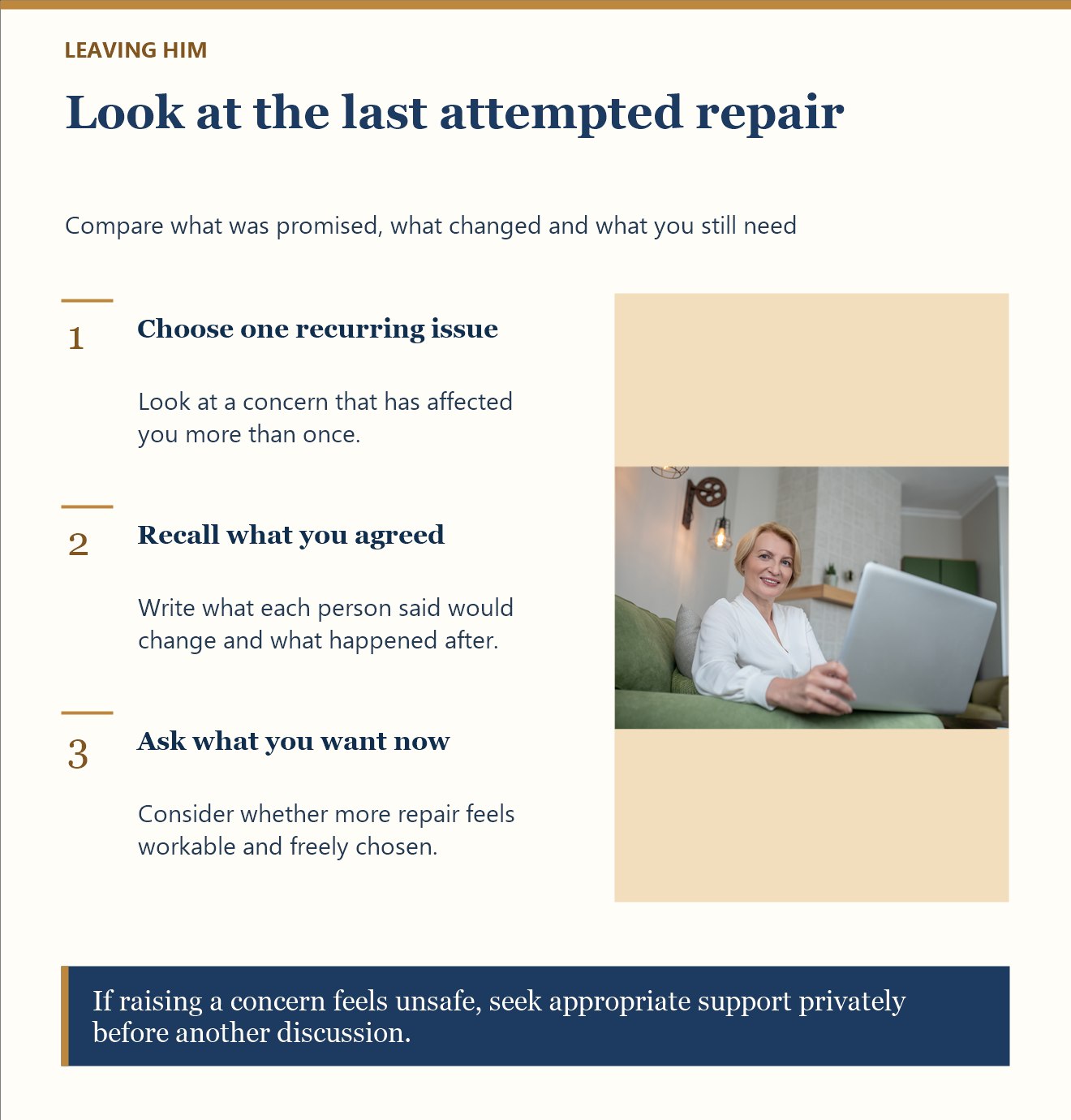
Look at the last attempted repair
Compare what was promised, what changed and what you still need
- Choose one recurring issue Look at a concern that has affected you more than once.
- Recall what you agreed Write what each person said would change and what happened after.
- Ask what you want now Consider whether more repair feels workable and freely chosen.
If raising a concern feels unsafe, seek appropriate support privately before another discussion.