

You may understand “old soul” spiritually, or use it to describe feeling reflective, drawn to tradition or interested in a deeper connection. In a relationship, it helps to explain what that meaning looks like in everyday life.
The label does not tell you whether two people want the same future. Shared values, respectful behaviour and freely chosen commitment still need to be discussed and lived.
Explain what the idea means to you
One person may mean a belief in experiences across lifetimes. Another may mean enjoying quiet evenings, long conversations or familiar traditions. Neither interpretation gives a partner instructions about how to behave.
Try making the preference concrete: “I enjoy time without distractions and would like an evening when we can talk.” That gives the other person something they can understand and respond to.

Talk about values without ranking people
Calling yourself an old soul does not make your morals, feelings or way of loving more important than someone else’s. A partner who enjoys novelty, socialising or a different spiritual view may still be thoughtful and caring.
Discuss the values that affect your choices: honesty, family responsibilities, spending, faith, commitment or how you handle disagreement. You can respect a difference and still decide that a particular relationship does not fit.
Make room for depth and ordinary life
Meaningful conversations and small gestures can matter to you. Ask what feels caring to your partner too. A handwritten note, shared chore or quiet walk can carry different meanings for different people.
You do not have to turn every misunderstanding into a spiritual lesson. Sometimes a missed plan needs an explanation and a practical change. The willingness to listen and repair matters more than how profound the relationship sounds.
Let closeness develop at a shared pace
A strong sense of recognition can feel special. It does not establish that someone is trustworthy, available or ready for the same commitment. Give yourself time to see how they behave in ordinary situations.
You can enjoy the connection while keeping friendships, routines and your own space. If you prefer a slower pace or more traditional dating, explain the preference without treating agreement as proof that the other person is spiritually mature.
Keep care mutual and freely chosen
Being caring does not mean always anticipating another person’s needs or becoming responsible for their feelings. Ask what help is wanted and be honest about what you can offer. Leave room for both people to decline.
If you notice that you are continually doing more to keep the connection, consider your needs, preferences and relationship choices. You do not need to earn love by becoming endlessly useful.
Choose a conversation over a compatibility label
You might say: “When I call myself an old soul, I mean that shared values and time to talk matter to me. What helps you feel close, and what kind of relationship are you looking for?”
Listen for an answer you can understand, then compare it with behaviour over time. A spiritual or personal meaning can enrich your experience of love while leaving both people free to choose whether the relationship works for them.
Move from a spiritual label to an ordinary plan
If you describe yourself as an old soul because you like collecting family stories, tell the other person about one story you treasure. Ask what they enjoy passing on or learning. You might decide to visit a local archive together, or choose something entirely different you would both enjoy.
Read the infographic in text
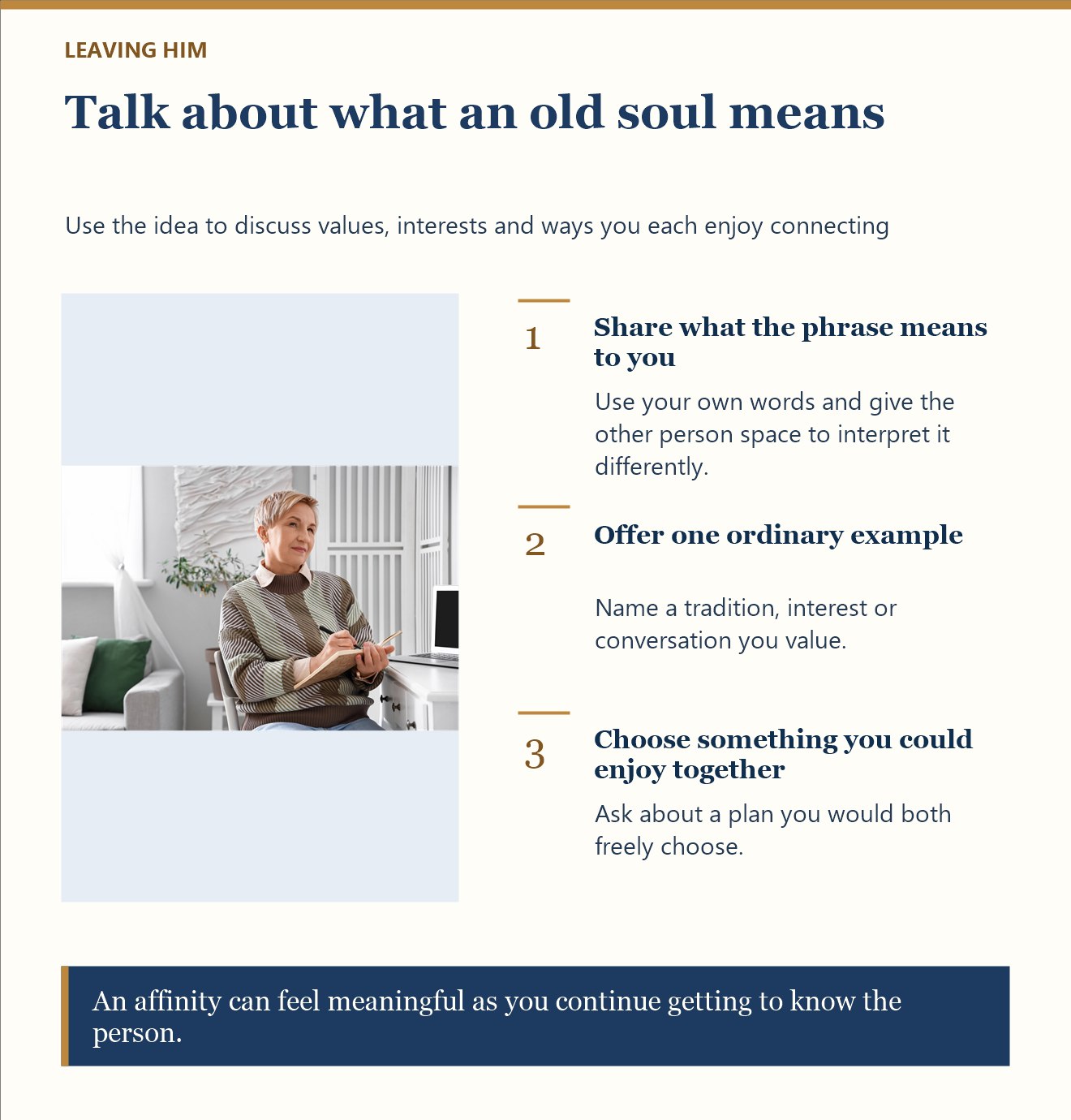
Talk about what an old soul means
Use the idea to discuss values, interests and ways you each enjoy connecting
- Share what the phrase means to you Use your own words and give the other person space to interpret it differently.
- Offer one ordinary example Name a tradition, interest or conversation you value.
- Choose something you could enjoy together Ask about a plan you would both freely choose.
An affinity can feel meaningful as you continue getting to know the person.