

Emotional attachment can mean valuing someone’s presence, wanting their care and feeling affected when the connection changes. It can grow in friendship or romance. Attraction, frequent messages or a generous gesture alone cannot tell you what another person feels or wants.
If you are wondering about your own attachment or a partner’s, look at the pattern over time: care, freely chosen contact, honest agreements and room for both people’s lives. You do not need to decode every gesture before asking a clear question.
What emotional attachment can mean
Closeness does not follow one fixed sequence from friendship to physical attraction to love. People may feel connected at different speeds or want different kinds of relationship. Your feelings matter, and so does whether the connection works for both of you.
Closeness is not a test of devotion
Someone does not have to be available every moment, solve every problem or make a dramatic sacrifice to care about you. Consider ordinary reliability: do they listen, follow through and treat your limits respectfully? Notice whether you can offer the same consideration.

Look for consistency in everyday life
Contact you can both welcome
Regular conversation can be part of closeness, but message frequency depends on work, health, responsibilities and preferences. Agree on what contact feels manageable. A delayed reply does not establish rejection, and repeated demands for an immediate answer are not proof of love.
A place in each other’s lives
Meeting friends or family may matter to you, but timing can reflect privacy, family circumstances or how new the relationship is. Ask what an introduction means to each of you rather than treating it as a promise of a shared future.
Time together and time apart
Making time for each other can show interest. Keeping friendships, family contact, hobbies and solitude can also support a relationship. Neither person needs to give up everyone else to demonstrate that the connection matters.
Remembering what matters
Remembering a preference or an important date can feel caring. Forgetting something once does not reveal a person’s whole emotional life. Explain what matters to you and notice how they respond, including whether they take a missed agreement seriously and try to repair it.
Care should leave room for choice
Openness without pressure
Sharing a worry or personal story can express trust. You can listen without disclosing equally private information in return. Closeness grows more freely when either person can say, “I am not ready to discuss that,” without being punished or challenged to prove their love.
Commitment you have actually agreed
Exclusivity, shared plans and expectations need a conversation. Pressure to commit quickly is not evidence of deeper attachment. You can ask what each of you wants, say what you are ready for and decline an arrangement that does not fit.
Advice you are free to decline
Asking for your opinion may show that someone values it. It does not make you responsible for their decisions, and offering advice does not give either person control. A useful exchange leaves room to think differently.
Support without possessiveness
Support might mean listening, respecting your account of a difficult situation or asking what help you want. Monitoring your movements, choosing your friends or starting conflicts on your behalf are different behaviours. Care does not require control.
The freedom to leave
Staying through a disagreement can reflect willingness to work on a relationship, but staying is not always the right choice. Either person can end a connection. You do not owe continued contact because someone says they cannot live without you.
When closeness becomes hard to manage
Pay attention if you repeatedly abandon your own needs, monitor someone’s activity or feel unable to get through the day without reassurance. Describe the specific behaviour rather than diagnosing yourself or the other person. One intense feeling or a fast beginning does not, by itself, establish an attachment problem.
Finding support
You might talk with a trusted person outside the relationship, restore time for your own routines or seek qualified support if distress is making daily life difficult. The NHS guidance on relationships and wellbeing offers practical information about boundaries, communication and outside support.
If you are afraid of a partner’s reaction, consider a personal safety plan. You do not have to confront them to make your concerns valid.
Ask about the relationship you are actually having
Warmth can be sincere without meaning that someone wants the same future as you. Ask about the decision that matters now: dating, exclusivity, more consistent contact or a shared responsibility. A direct answer is more useful than a list of supposed signs.
Compare plans with actions
Look at whether a person keeps agreed plans and communicates when something changes. Consider your own experience too: can you raise a concern, and does the response leave room for it? Repeated promises without follow-through deserve attention even when affection feels strong.
Connection can mean different things to each person
One person may feel deeply attached while the other values a friendship or a more casual connection. Neither needs to manufacture matching feelings. What matters is whether you can be honest about the difference and choose contact that respects both people.
Let closeness grow at a shared pace
You can show interest, listen and make time together. You cannot make another person become attached through the right words, physical intimacy or repeated favours. Notice whether both of you are choosing the connection, rather than doing more in the hope of earning commitment.
Attraction and intimacy do not answer every question
A kiss is not an agreement
A kiss can be affectionate, exciting or meaningful. It does not establish exclusivity, consent to further intimacy or a promise of a relationship. You can ask what it meant without assuming that either person’s interpretation must be the same.
You cannot count someone else’s thoughts
Remembering you or imagining a future together is private unless a person shares it. Instead of trying to work out whether they think about you constantly, consider what they communicate and how they treat you when you are in contact.
Love and compatibility are different questions
You may care deeply for someone and still differ about children, commitment, daily life or acceptable behaviour. Hope and spiritual reflection can have personal meaning, but they cannot secure another person’s devotion. Decisions still depend on what both people freely want and do.
Have one clear conversation
Try: “I feel close to you, and I would like to understand what you want from this relationship. I am looking for regular time together and exclusivity. Is that something you want too?” Adapt the wording to your needs and give the other person room to answer honestly.
Choose a next step you can control
If your wishes fit, agree on one practical next step and see how it works. If they do not, you can change the contact, take some distance or end the relationship. Strong attachment can be a feeling you acknowledge while still protecting your boundaries.
Consider what you want during time apart
If a friend or partner usually replies right away and has become busier, ask whether a regular catch-up would feel useful to both of you. You could also keep a plan with another friend. Notice whether you feel able to ask for connection and whether each person can say when they’re available.
Read the infographic in text
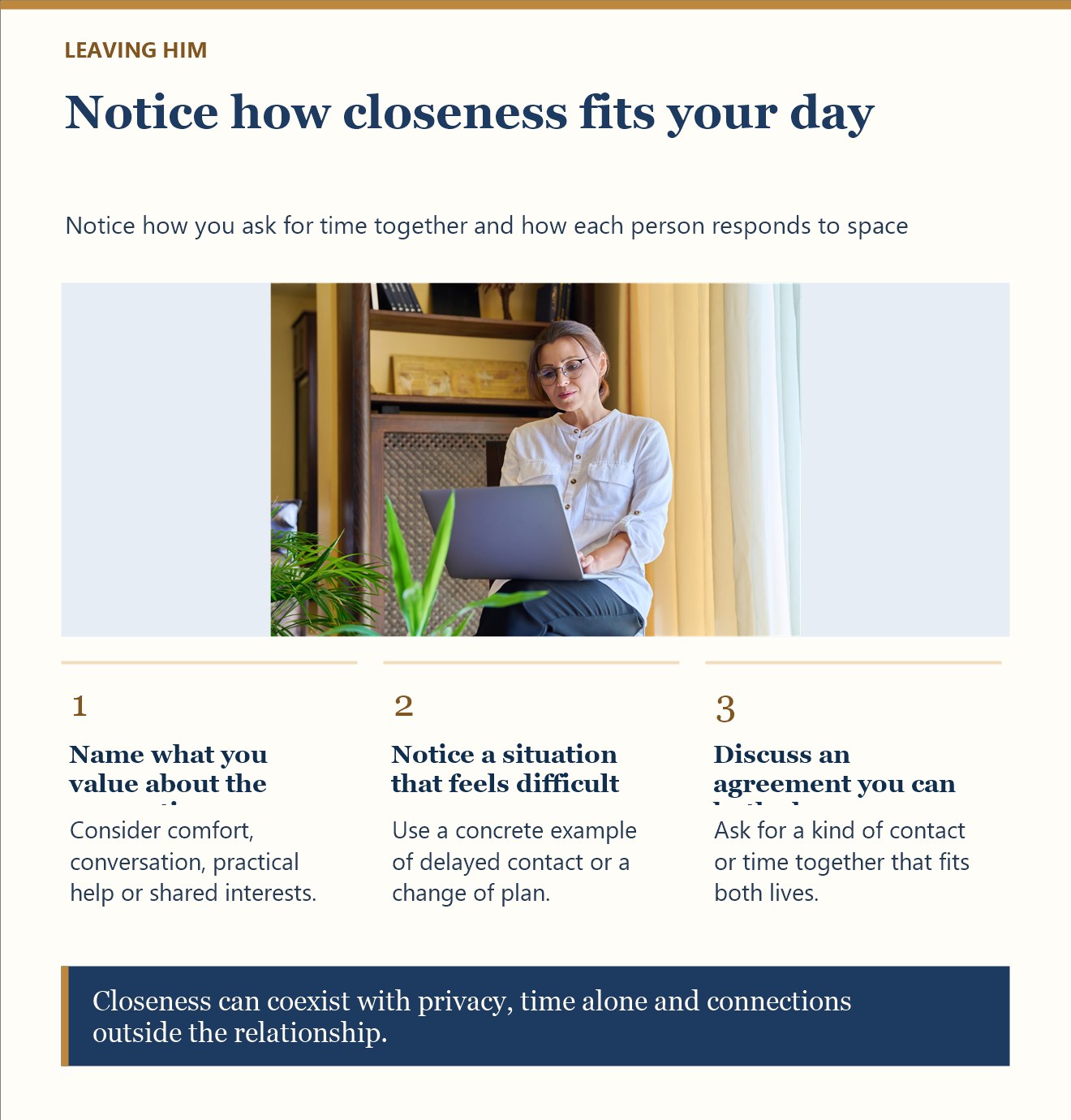
Notice how closeness fits your day
Notice how you ask for time together and how each person responds to space
- Name what you value about the connection Consider comfort, conversation, practical help or shared interests.
- Notice a situation that feels difficult Use a concrete example of delayed contact or a change of plan.
- Discuss an agreement you can both choose Ask for a kind of contact or time together that fits both lives.
Closeness can coexist with privacy, time alone and connections outside the relationship.