

A personal safety plan starts with the circumstances you are living in: who you can contact privately, where you could go and what help you would need. You can begin while you are unsure about leaving. You do not have to settle the future of the relationship before asking for support.
Choose one manageable step that does not increase your risk. If there is immediate danger, seek local emergency help when you can safely do so; gathering belongings or finishing a worksheet can wait.
Your safety plan at a glance
Choose a starting point that fits your circumstances. You can ask for support before deciding to leave.
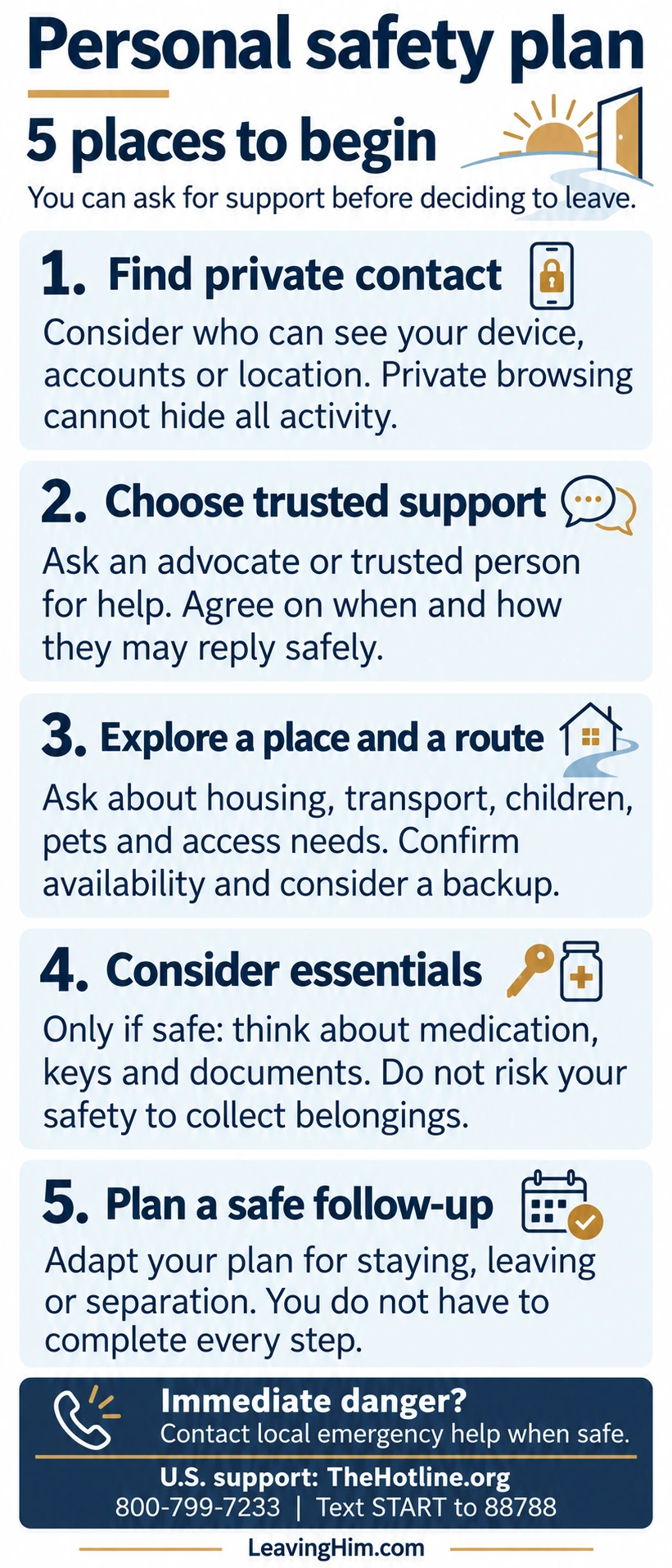
Read the five points as text
- Find private contact. Consider who can see your device, accounts or location. Private browsing cannot hide all activity.
- Choose trusted support. Ask an advocate or trusted person for help. Agree on when and how they may reply safely.
- Explore a place and a route. Ask about housing, transport, children, pets and access needs. Confirm availability and consider a backup.
- Consider essentials. Only if safe: think about medication, keys and documents. Do not risk your safety to collect belongings.
- Plan a safe follow-up. Adapt your plan for staying, leaving or separation. You do not have to complete every step.
Immediate danger? Contact local emergency help when safe.
U.S. support: The National Domestic Violence Hotline: 800-799-7233, or text START to 88788.
Explore The Hotline’s personal safety planning and internet-safety guidance for more help.
Planning Without Proving Your Own Circumstances
People often wait to ask for help because there's been no physical abuse and the relationship still has loving moments, or they worry about taking resources from someone else. You can talk with a domestic violence advocate about fear, threats, isolation, sexual pressure, stalking, or control of money and your own movements.
You can also consider regular separation without being abused. In this case, planning housing, transportation, and emotional support can be helpful. The difference matters because advice such as saying your intentions or negotiating things together may be unsafe if the partner is intimidating you.
The National Domestic Violence Hotline explains that a plan should fit the individual and can be used before, during, or after leaving. Treat a checklist as a starting point for a private conversation, rather than a set of instructions you must complete.
You know details of your daily situation that a checklist cannot capture. An advocate can help you explore options while respecting your decisions.
Starting with Now
Before you make a long list, think about where you're at now. Are you able to have a phone call, is there any place you could go if the tension gets too much, and is there anyone who could help without you confronting your partner?
If violence is happening, make getting to a safer place a priority instead of trying to win an argument or explaining your reasons. If you can, don't get trapped in a room without an exit or close to any weapons. Only use options that are realistic in your home and your situation.
One helpful thing is keeping your notes safe. Even if it just contains three items, such as a person, a place, and a way to get there, you don't want people to see it. You also don't have to complete an entire life plan during a scary evening.
If you're trying to leave and can't arrange permanent housing this week, but you talk privately with an advocate during your lunch break and identify a friend who could get you from a public place, this limited arrangement is still good preparation.
Find Someone You Trust Who Can Help
If you're dealing with an unsafe relationship, having someone you trust to turn to can make a difference. This might be a close friend, family member, or someone else who respects your privacy and understands that your safety comes first. But it's important to pick someone who will listen to what you need instead of trying to take control of the situation. Someone who immediately wants to confront your partner might actually make things more difficult or dangerous.
Try to be specific about what kind of help you might need. For example, you could ask, "Would you be able to pick me up if I needed a ride?" or "Could you keep an important phone number for me?" It's also important to understand what the person can realistically do. Just because someone wants to help doesn't mean they'll always be available.
You might also want to agree on a simple word or message that lets them know you need help. Make sure you both understand exactly what the signal means and what they should do when they receive it. Also, consider whether your partner might be able to see your messages before deciding how to communicate.
Let your trusted person know what you don't want them to do, too. For example, you might ask them not to share your location, post anything about your situation, contact your relatives, or tell anyone where you're staying. Their role should be to support your safety and decisions, not investigate your relationship or make choices for you.
Have More Than One Safe Place in Mind
If you're thinking about leaving an unsafe relationship, it can help to have more than one place you could go. Sometimes plans don't work out the way we expect. A friend might not be home, transportation could be unavailable, or a shelter might not have enough space. Having another option in mind can make it easier to adjust if your first plan doesn't work.
Think about whether each location would actually meet your needs. For example, could you get inside if you arrived late at night? Would there be enough space for your children? Could you bring necessary medications or medical equipment? You might also need to consider accessibility, transportation, or whether your partner would know where to find you.
A domestic violence advocate might be able to help you learn about shelters, housing programs, transportation, and other resources in your area. But services can have different requirements, so it's important to ask what's available before depending on a particular option. If you need accessible transportation, an interpreter, or another accommodation, make sure to mention that when asking for help.
You also don't have to tell your partner where you're planning to go if sharing that information could put you in danger. If you're worried about being followed or having your location tracked, consider getting private advice from someone who specializes in safety planning before making arrangements.
Help Your Children Understand What to Do
When children are involved in an unsafe relationship, it's important to think about what they might need to know if something happens. Depending on their ages, this could involve knowing which trusted adult to contact, where to go for help, or how to call emergency services. They should also understand that they aren't responsible for stepping into an argument or trying to physically protect an adult.
Keep any instructions simple and appropriate for their age. Younger children might have trouble remembering several steps, especially when they're frightened. You also don't want to overwhelm them with details or make them feel responsible for keeping the family safe. Any preparation should be handled carefully so that it doesn't frighten them unnecessarily or expose a private safety plan.
You might also need to think about practical things like school pickup arrangements, medical needs, important phone numbers, and familiar items that help your children feel comfortable. If there are custody agreements, court orders, or plans to travel across state or national borders, getting legal advice is especially important before making changes.
For example, imagine that Jessica is concerned about leaving an unsafe relationship while caring for her young son. Instead of putting together a large bag that her partner might discover, she speaks privately with a qualified advocate about her options. She also finds out who is currently authorized to pick up her son from school and asks about the legal process for changing those arrangements if needed.
The important thing is protecting your children without making them responsible for handling adult problems. They need reassurance, simple information, and support from adults who can help keep them safe.
Remember Your Pets, Medications, and Everyday Needs
When you're making a safety plan, it's important to think about the things you depend on in everyday life. This might include prescription medications, medical equipment, mobility aids, hearing devices, or help from a personal care assistant. If you have children or pets, their needs should also be part of your planning.
If you have a pet, you might want to ask local shelters or support organizations whether they allow animals or know of temporary pet care programs. Some places might ask for vaccination records or proof of ownership, while others might not be able to accommodate pets. Assistance animals can have different access protections depending on the situation and local laws, so it's worth asking about those arrangements ahead of time.
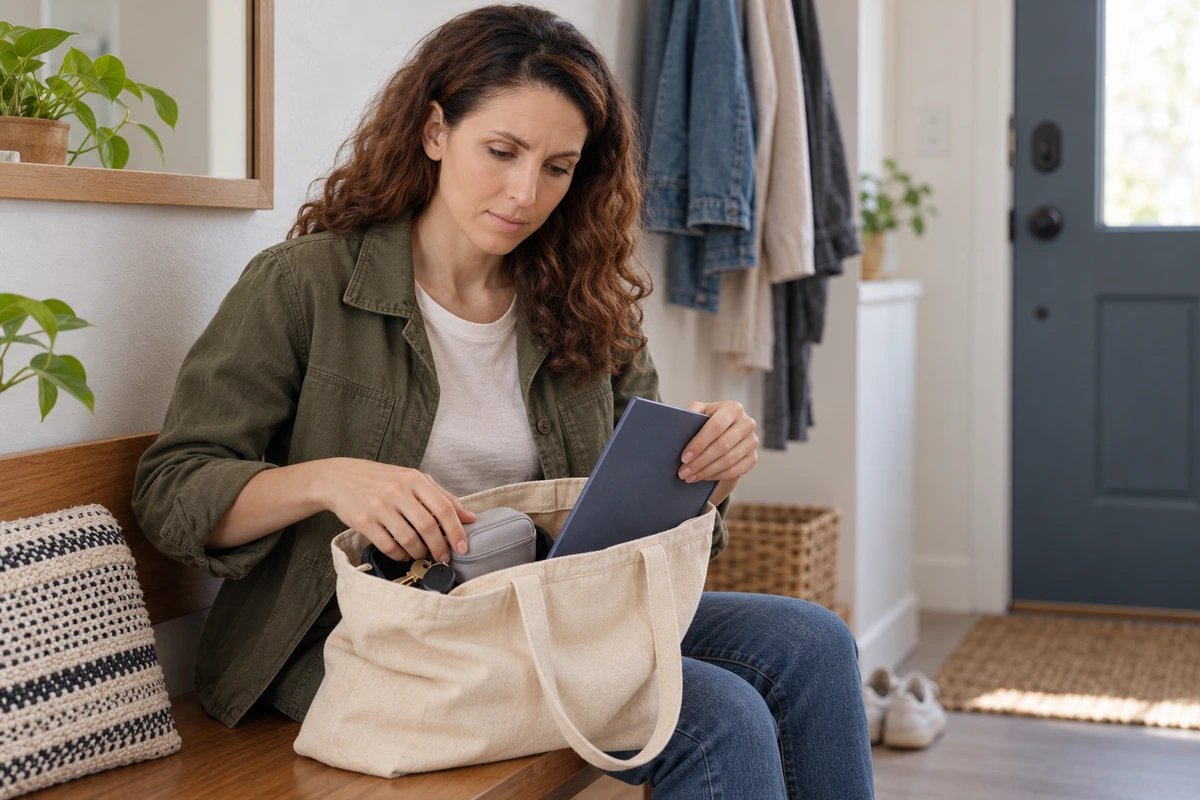
It's also important to consider what you would do if you had to leave without your medications or medical equipment. A pharmacist, healthcare professional, or support worker might be able to help you explore options for getting what you need. But if gathering supplies could alert your partner or put you in danger, talk with a qualified advocate about safer alternatives.
Sometimes writing down a short list of your needs can make it easier to explain your situation when asking for help. For example, you might say, "I use a wheelchair, have a child with food allergies, and need somewhere we can reach without a car." This gives the person helping you a better understanding of what kind of support would actually work.
Remember that you shouldn't have to ignore your health, disability, family responsibilities, or pets just because you need assistance. Your circumstances matter, and a good safety plan should consider what you realistically need rather than expecting you to manage without important care or support.
Money and Documents
Identification, bank information, immigration papers, prescriptions, keys, and records relating to children might be useful. If it's safe and lawful, think about where important documents are and whether the copies need to be stored somewhere the other person can't get to. Don't risk confrontation to get paperwork. Some documents can be replaced, even though replacement can take time and help. Safety takes priority over completing your folder.
Financial planning might involve asking about benefits, emergency housing support, banking, or access to income. Get qualified advice before major transfers or changes to shared accounts. Legal rights and safety consequences depend on the situation you're in.
Think about the traces that happen with a new account, mailed statements, or cash withdrawals. Domestic violence advocates and appropriate financial or legal support can help you look at practical options without thinking every standard budgeting tip is safe for you.
Digital Privacy
Sharing a phone plan, location-sharing app, smart home devices, connected cards, or family tablets can give information. Private browsing does not make a monitored device private. The Hotline's internet safety guidance describes several ways technology can be used to monitor someone.
A password change or removal of tracking access can sometimes alert the person who's monitoring you. Before you change the settings, think about getting advice from professional support or using a safer device. Do not assume that clearing the history removes every trace of information.
Think about who is able to see things like calendar entries, saved passwords, photos, ride receipts, delivery addresses, or account recovery messages. Even friends can tell a location through a group chat or tagged photo without meaning to.
You don't have to be a technology expert to ask questions. Find out which device and communication method can allow you to have conversations with the least risk. This question can be more helpful than changing different settings at one time.
Preparing to Leave
Some people decide to leave, while others need to plan, get outside help, or have more time. A change of plans doesn't mean you failed. If someone controls your money, housing, and documents, and has access to the children, these are serious obstacles.
Figure out when it's safe to plan to leave, and consider timing, transportation, communication, and who you want to tell. You don't owe everyone a face-to-face goodbye if it's going to put you at risk. Don't arrange a confrontation just to make the separation feel official.
In the United States, the National Domestic Violence Hotline can be reached at 800-799-7233 or by texting START to 88788, if those methods are safe for you. Elsewhere, seek a local domestic violence service. Calls, texts, and browsing may leave records.
You can ask for help and still be undecided. You can say you're not ready to leave, but you need to understand your options. This is a good reason to get support.
Preparing for Your Separation
Moving out does not necessarily end unwanted contact or control. Workplaces, schools, social media accounts, and shared properties can create continuing points of contact with the person.
After separation, review which information needs to remain private and who needs a practical update. You need to decide what needs to stay private. A workplace contact might need a picture or an instruction about visitors, and a school might need an updated information log. Ask professionals about the right procedures and your legal options.
If you have unwanted contact and need to document it because it's useful and safe, ask someone how to do it without increasing your risk. Don't secretly record conversations without checking the laws, and don't put yourself in danger to get evidence.
Emotional support matters too. If you miss someone, are questioning your decision, or feel lonely, it doesn't mean that how they treated you was acceptable. Get the support that lets you be honest without shaming you or pressuring you into making a decision.
Having Safe Contact
Support can create problems when people don't know how to reach you. Before you arrange a callback, say whether a voicemail, text, email, or an organization on the caller ID can be seen by someone else. Ask what kind of information a service needs and how it handles messages.
Someone might ask the company not to leave a voicemail and say they'll get back in contact tomorrow from a different phone. A friend might agree to talk about sensitive plans only when they're in person. Neither of these arrangements needs to look the same for everyone.
Check if you can end a conversation quickly without explaining why. You could tell support at the start that you might have to hang up suddenly. Planning contact itself is part of making support usable, especially if privacy is limited.
Choose questions for a private support call
Pick one practical concern to get questions you can ask an advocate or support service. No personal details are needed.
Consider who may see your screen, device or browsing history. You can ask for help while you are still unsure about leaving.
Use the questions and examples in the article above; the draft builder needs JavaScript.
15 questions readers ask
1. Do I have to decide to leave before making a safety plan?
No. Planning can help while you stay, prepare to leave or live separately. You can ask an advocate about options without committing to a particular decision.
2. What is the smallest useful first step?
Identify a private way to contact support and one immediate need. A person you could call, a possible destination or a transport question can be a useful starting point.
3. Do I need physical injuries to ask for help?
No. Threats, isolation, sexual pressure, stalking and control over money or movement are reasons to seek support. You do not need to diagnose your partner.
4. Should I tell my partner I am planning to leave?
Consider the risks with a specialist advocate. Announcing plans or arranging a private confrontation can be unsafe when intimidation or coercive control is present.
5. Where can I keep a written safety plan?
Only keep one if doing so is safe. Consider who can access the paper, account, device or backup. A private conversation may be safer than storing notes.
6. Does private browsing hide my plans?
It does not make a monitored device private or erase every trace. A device the other person cannot access may offer a safer way to seek help.
7. Should I change every password immediately?
A change can alert someone who monitors accounts. Ask a specialist about timing, account recovery, shared devices and location settings before making changes that could increase risk.
8. What if I have nowhere permanent to stay?
Ask local services about immediate and longer-term options, availability and eligibility. Explain transport, accessibility and family needs rather than assuming every shelter can accommodate them.
9. What essentials should I consider?
When safe, think about medicines, identification, keys, contact information and necessary care items. Do not delay urgent help or risk a confrontation to collect possessions.
10. How should children be included?
Use age-appropriate guidance from qualified support. Children should know how to seek help without being expected to intervene in violence or protect an adult.
11. Can pets be part of the plan?
Yes. Ask about animal-friendly accommodation or temporary care and any required records. Availability varies, so mention pets before relying on a particular destination.
12. What if disability or medication affects my options?
Explain access needs, equipment, medicines and personal assistance when asking for support. A workable plan must account for your actual care needs.
13. Should a friend confront my partner?
Ask trusted people to follow your wishes about contact, privacy and location. Confrontation can increase risk; practical help may be more useful.
14. Does separation end the need for planning?
Not always. Schools, workplaces, shared property and necessary communication may remain points of contact. Review the plan as circumstances change.
15. How can I contact the US National Domestic Violence Hotline?
If safe, call 800-799-7233 or text START to 88788. Communication can leave records. Outside the United States, contact an appropriate local domestic violence service.