

A forgotten plan, an unkind remark or a disagreement can leave you wondering what your partner’s actions mean. A mistake does not reveal everything about their feelings. It still deserves attention when it hurts you or leaves a responsibility unmet.
Caring about someone does not require unconditional agreement, endless availability or accepting harmful behaviour. Consider what happened, its effect and what follows when the concern is raised. You can ask for change without claiming to know the person’s intentions.
If there are threats, coercion or fear of retaliation, prioritise private specialist support rather than trying the conversation suggestions below. You do not need to wait for a pattern or a physical injury before seeking help.
On this page
1. Separate a concern from personal criticism
“The bill was not paid as agreed” names a problem. Insults about intelligence, appearance or worth attack the person. You can discuss an action without accepting humiliation as ordinary feedback.
The National Domestic Violence Hotline describes emotional abuse as including nonphysical behaviour used to control, isolate or frighten someone. Repeated put-downs or intimidation deserve support beyond advice to communicate more calmly. A label is not a requirement for taking the effect on you seriously.

2. Turn an unmet need into a clear request
Identify what is missing: attention, help with a task, affection, notice about plans or a chance to speak without interruption. “Care more” can be difficult to act on; “Please let me know if our agreed plan changes” is more specific.
A request starts a discussion rather than obliging someone to provide anything you ask for. Listen to what is realistic for them while keeping your own needs in view. If an essential need cannot be met, that is useful information about the arrangement.
3. Leave room for privacy and voluntary closeness
A partner does not have to share every thought, password or personal history to prove commitment. Privacy, time alone and choosing when to discuss something can coexist with affection.
If you miss closeness, describe the connection you want rather than demanding access. You might ask for time together without distractions. Notice whether both people can choose the pace of a conversation and decline a question without punishment.
4. Make arguments safer to return to
When a conversation becomes difficult to follow, a pause may help if it is safe to take one. Explain that you want to return to the issue and agree on a workable time, rather than leaving the other person to guess.
The NHS’s guidance on healthy relationships suggests listening, checking what you understood and taking time out when conflict is hard to discuss calmly. These are options for an ordinary disagreement; they do not make you responsible for preventing another person’s threats or aggression.
5. Share care without giving up your own life
Neither person needs to come first in every situation. Work, rest, friendships and caring responsibilities may all require attention. Discuss a specific clash rather than treating one competing plan as proof that you do not matter.
Care should leave room for each person’s capacity and choices. If you regularly carry tasks or emotional support alone, name the imbalance. Our guide to feeling neglected in a relationship offers ways to identify needs and consider a practical response.
6. Explain what important dates and plans mean to you
A missed birthday or cancelled arrangement can be upsetting. It does not, by itself, establish how invested someone is. Explain what you had expected and ask what happened.
If remembering dates or arranging time together matters to you, agree on how to handle it: a shared reminder, a planned celebration or earlier notice of a change. Repeatedly breaking an agreement deserves discussion even when each separate event has an explanation.
7. Explore values without demanding sameness
You may learn new things about each other’s beliefs, preferences and priorities throughout a relationship. Not knowing a favourite song is different from refusing to consider a decision that affects your life together.
Ask about the choices behind a disagreement: money, children, exclusivity, faith or where to live. Understanding each other does not guarantee agreement. A substantial difference may require a new arrangement or a decision about compatibility.
8. Distinguish unresolved harm from using the past as a weapon
An old concern may return because it was never addressed or because the same behaviour continues. Asking to discuss it is not automatically keeping score. An apology does not set a deadline for trust or forgiveness.
There is also a difference between explaining a continuing effect and using an unrelated mistake to humiliate someone or dismiss their current concern. Focus on what remains unresolved and what responsibility or repair would involve now.
9. Discuss support during illness realistically
When you are unwell, ask for the help you need: a meal, transport, a check-in or assistance arranging further support. Your partner may have limits, and one person may not be able to provide all the care required.
A clear limit can be discussed without insults or abandonment threats. Consider what other help is available and whether agreed responsibilities are being met. Lack of capacity and repeatedly dismissing a need are different concerns, even when both leave a practical gap.
10. Keep the right to disagree
Respect does not require your partner to agree when they think you are mistaken. Either person can question an idea, decline sex or contact, and make a different choice without owing proof of love.
Notice how disagreement is handled. Can you say no safely? Do accusations, monitoring or pressure follow? Our article on control presented as love can help you consider the freedom available to you. Seek private support if raising a boundary may put you at risk.
11. Look for responsibility followed by action
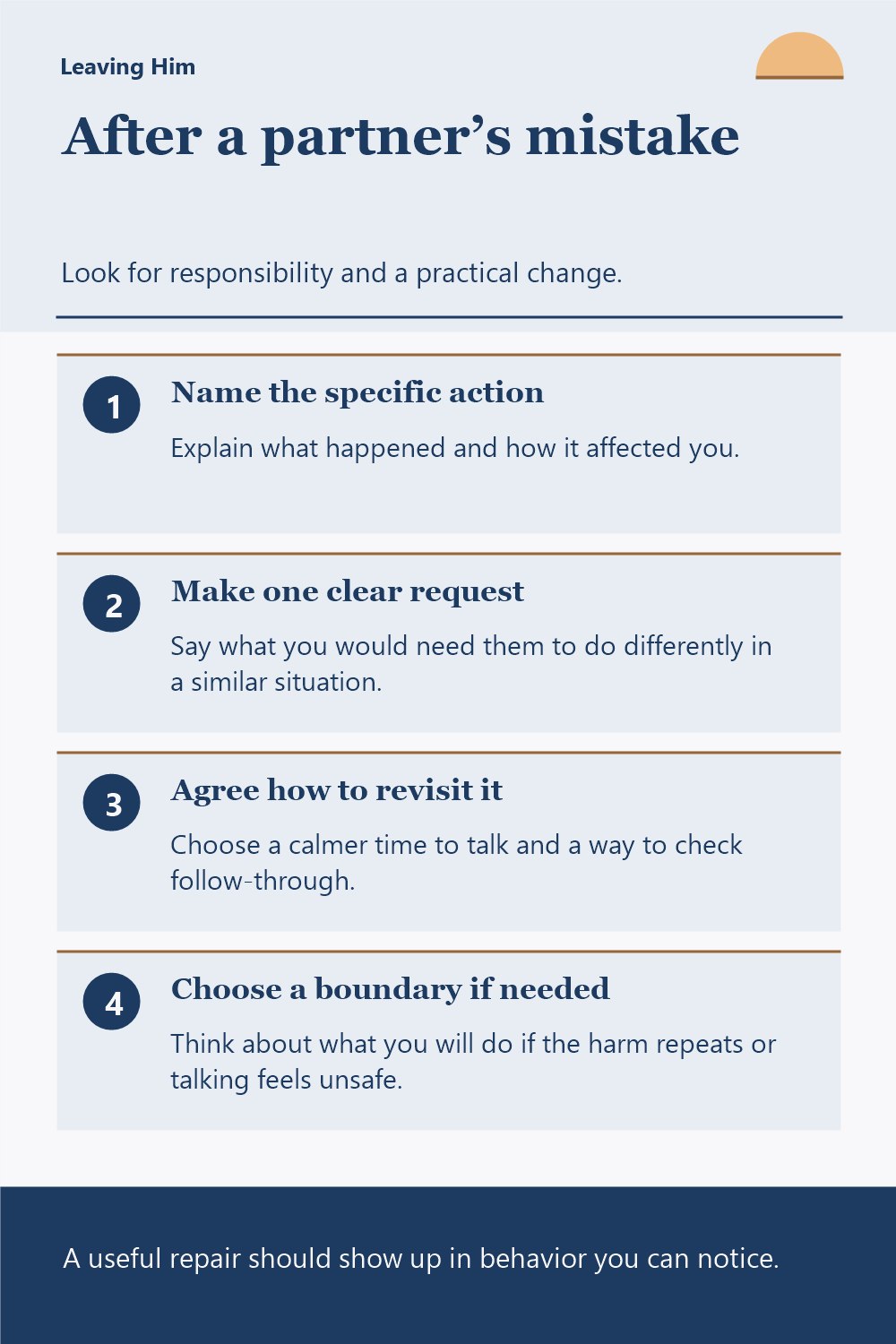
A useful response names what happened, acknowledges its effect and identifies what the person will do differently. “I forgot; I will arrange a reminder” gives you something clearer to consider than blaming you for expecting too much.
If you both want to continue and discussion is safe, choose one practical agreement and a time to review it. Consider whether the change happens and whether it helps. You cannot do someone else’s part for them.
You can appreciate an apology and still need time, support or a different arrangement. You do not have to exhaust every possible repair attempt before deciding to leave, and affection does not oblige either person to remain in the relationship.
Read the infographic in text
After a partner’s mistake
Look for responsibility and a practical change.
- Name the specific action Explain what happened and how it affected you.
- Make one clear request Say what you would need them to do differently in a similar situation.
- Agree how to revisit it Choose a calmer time to talk and a way to check follow-through.
- Choose a boundary if needed Think about what you will do if the harm repeats or talking feels unsafe.
A useful repair should show up in behavior you can notice.