

Letting go of an ex is about making room for your present life, even when feelings and memories remain. The contact boundaries that help depend on your circumstances, including shared children, work, housing and safety.
You can choose distance without hating the person, and you can handle necessary contact without treating it as a promise to restart the relationship.

Allow room for grief without setting a deadline
You can miss someone and still know that the relationship has ended. Sadness, relief, anger or an ordinary good afternoon can coexist. Having a difficult day does not erase the choices you have made.
Try to keep a few reliable routines: meals, rest, work or study, and contact with someone supportive. If distress is persistent or making daily life hard, consider professional support. You do not have to manage everything alone or wait until things become unbearable to ask.
Notice what contact does to your day
After a message or a visit, do you feel clearer about practical matters, or drawn back into uncertainty? Notice the pattern without treating every feeling as an instruction to act.
If optional contact repeatedly leaves you unsettled, a pause may help. For example: “I need some space and won’t be having personal conversations for now.” You can set a boundary without announcing a permanent rule for the rest of your life.
Remember the whole relationship
When you are lonely, a happy memory can become the entire story. Gently include the reasons the relationship ended: unmet needs, incompatible plans or behaviour you did not want to continue living with.
You do not have to make your ex entirely bad to justify leaving. Equally, good memories do not cancel harm. Keep any private notes somewhere appropriate for your circumstances. If you are leaving a harmful relationship, prioritize support and safety over obtaining agreement about the past.
Make necessary contact more workable
Children, a shared home, belongings or work can make complete separation impractical. Where it is safe, keep communication specific: one agreed channel, a clear purpose and a reasonable time for a reply. You can discuss a collection time without discussing the relationship again.
Existing parenting, housing or other legal arrangements may affect your choices; seek suitable local advice rather than relying on a blanket no-contact rule. If there is abuse, stalking or coercion, specialist support can help you consider safer arrangements. Do not assume an ordinary cooperative conversation will be safe.
Keep friendship optional
Friendship after a breakup needs genuine agreement and boundaries that both people can respect. You do not have to offer it to demonstrate maturity, soften the breakup or keep the other person from feeling disappointed.
If one person is quietly waiting for romance to return, it may be time for more distance. You can also decide that friendship is not right for you. See choosing friendship when feelings are unequal for ways to make that distinction.
Reduce reminders that keep pulling you back
You might mute an account, archive an old chat or put photographs out of everyday view. Choose changes that help you use your attention differently. Blocking may be appropriate, but it is not a universal measure of progress.
You can ask mutual friends not to send updates or carry messages. If monitoring or retaliation is possible, consider digital safety with an advocate before making noticeable account changes. You are not obliged to explain each boundary publicly.
Date again at a pace you can explain honestly
There is no required waiting period and no requirement to date at all. Ask whether you are interested in the new person, what you can offer and whether you can be honest about your expectations.
A new relationship does not have to prove you are over your ex. Avoid using someone as a test, a distraction you cannot discuss or a way to provoke jealousy. The guide to dating after a breakup offers questions to consider without treating the timing alone as a verdict.
Choose one manageable next step
Letting go can be a series of small decisions: not checking an account tonight, agreeing on a belongings collection, or spending an evening with a friend. You do not need a dramatic reinvention, new clothes or a lesson that makes every painful experience feel worthwhile.
Pick one change that makes tomorrow more workable. Review whether it helps, and adjust with support. Remembering your ex later does not mean you have failed or must resume the relationship.
Give one shared place a different purpose
If a café reminds you of your ex and you still like going there, decide whether to take a break or try a different time with a friend. Put old photos away if seeing them at home makes the transition harder. Keep the changes small enough that you can adjust them.
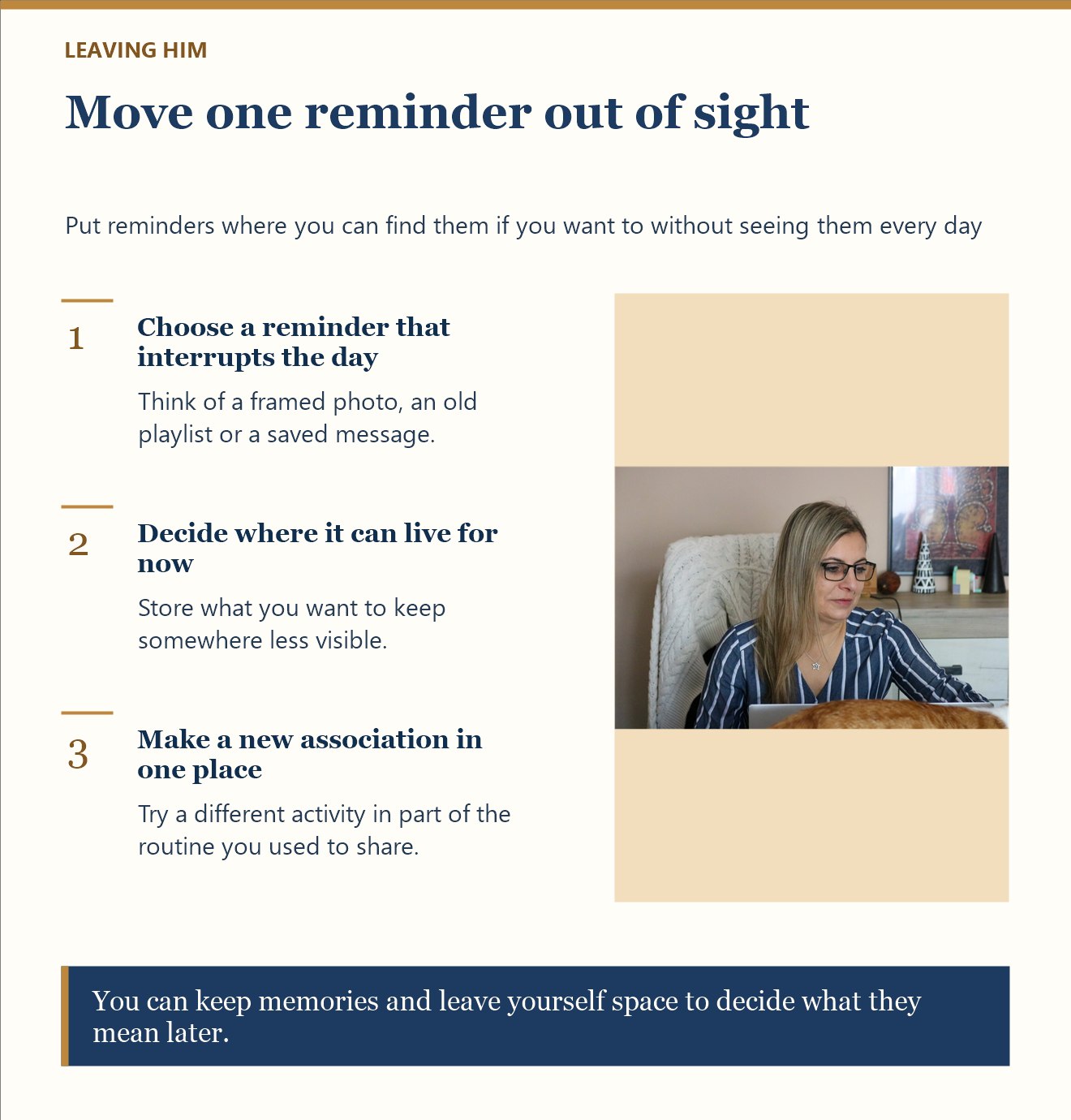
Read the infographic in text
Move one reminder out of sight
Put reminders where you can find them if you want to without seeing them every day
- Choose a reminder that interrupts the day Think of a framed photo, an old playlist or a saved message.
- Decide where it can live for now Store what you want to keep somewhere less visible.
- Make a new association in one place Try a different activity in part of the routine you used to share.
You can keep memories and leave yourself space to decide what they mean later.