

Someone may seem like a good match on paper while you do not want a romantic relationship with them. Friends, family or the person themselves may encourage you to keep trying, but your wishes belong in the decision.
You can be uncertain, ask to slow down or decide not to continue. Kindness, compatibility and time already spent together do not create a debt of attraction or physical affection.
Kindness does not create an obligation to date
Someone can be kind, dependable and well liked without being the person you want a romantic relationship with. Appreciating those qualities is different from consenting to keep dating, become exclusive or be physically affectionate.
You do not have to prove that something is wrong with the other person to say no. They may feel disappointed, but avoiding all disappointment is not a promise you can make.

Separate your wishes from other people’s preferences
Ask what you want when you set aside friends’ opinions, family expectations and the fear of seeming ungrateful. Are you curious about another date, unsure about the pace, or continuing mainly because people think you should?
A simple response to outside pressure can be: “I appreciate that you like them. I need to make this decision myself.” You do not owe your family a detailed account of your attraction or private conversations.
Uncertainty can have room without becoming a promise
If you genuinely want more time, you can say so: “I am enjoying getting to know you, but I am not ready for exclusivity.” Be clear about what you are and are not agreeing to, and let the other person decide whether that works for them.
Feelings can change, but you do not have to keep testing the possibility indefinitely. You can stop dating before you reach complete certainty about how you might feel in some future situation.
Communicate clearly when it is safe
If you have decided not to continue, a direct message may be kinder than repeated vague postponements: “Thank you for the time we have spent together. I do not want to continue romantically.” Avoid offering a future relationship you do not want in order to soften the answer.
Choose a communication method that fits the relationship and your safety. If you fear anger, pressure or retaliation, you do not owe an in-person meeting or a long debate. Get support if a clear no is repeatedly ignored.
Make friendship a separate choice
Friendship is optional for both people. It may be workable, need more distance or not be something either person wants. It should not be offered as a waiting room where persistence will eventually produce romance.
If you choose friendship, discuss boundaries around messages, one-to-one plans and dating conversations. The guide to staying friends when feelings are unequal can help you consider whether the arrangement is comfortable and honest.
Notice what happens when you set a boundary
A respectful response leaves room for your decision, even when the person is sad or disagrees. Pressure, guilt, repeated persuasion or treating past generosity as a debt are reasons to reconsider the contact you want.
Your next step might be declining another date, asking to slow down or telling someone you trust that you need less pressure. You can make that choice without diagnosing yourself or promising to feel differently later.
Read the infographic in text
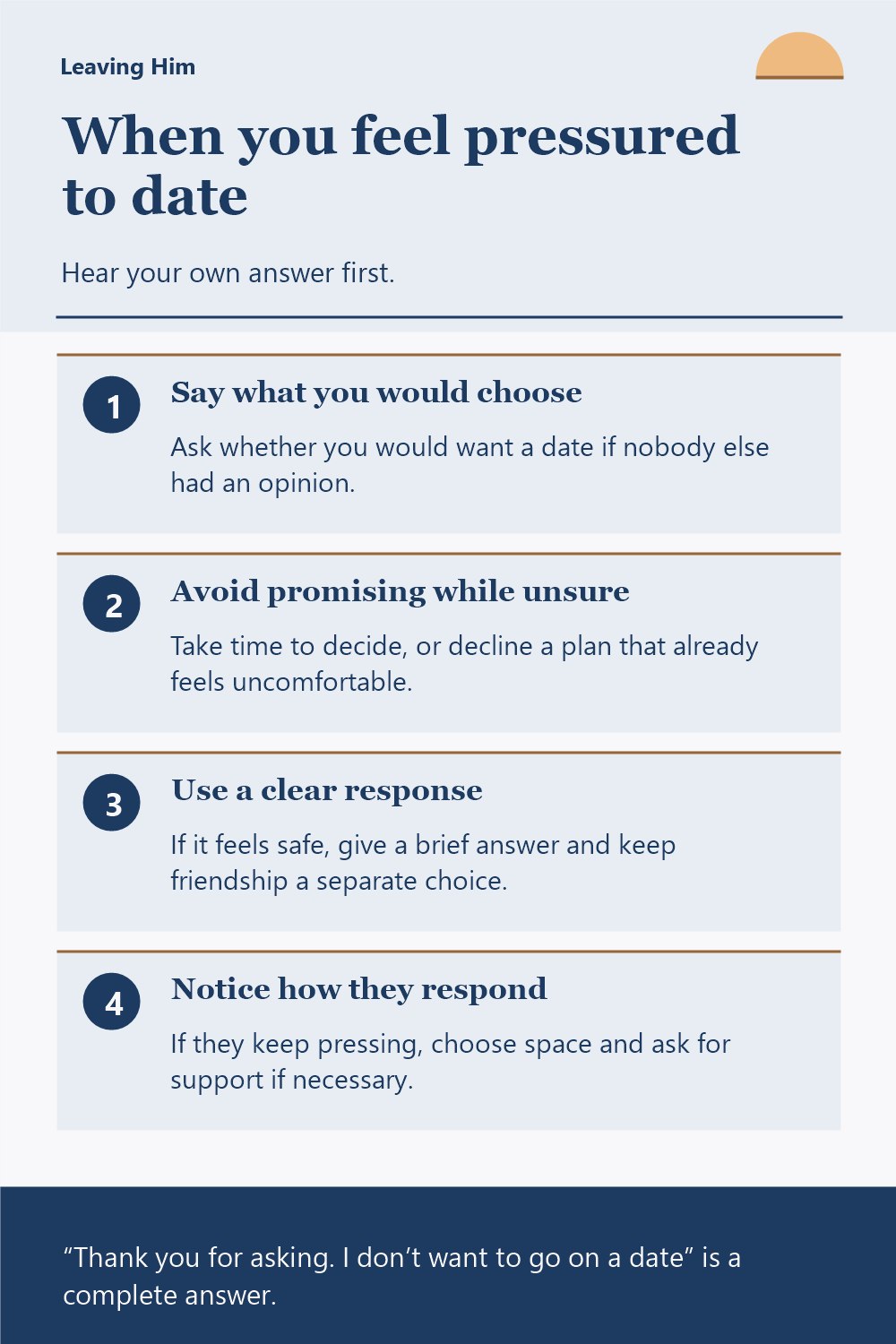
When you feel pressured to date
Hear your own answer first.
- Say what you would choose Ask whether you would want a date if nobody else had an opinion.
- Avoid promising while unsure Take time to decide, or decline a plan that already feels uncomfortable.
- Use a clear response If it feels safe, give a brief answer and keep friendship a separate choice.
- Notice how they respond If they keep pressing, choose space and ask for support if necessary.
“Thank you for asking. I don’t want to go on a date” is a complete answer.