

Knowing that you are considering a breakup does not make the decision or the practical arrangements easy. You may still care about the person, depend on shared resources or feel uncertain about what life afterward would involve.
These ten concerns can help you name what feels difficult. They are questions to consider, rather than a score that tells you whether to stay or leave. If threats or control are involved, seek private specialist support before announcing plans.
A shared history carries weight
Good memories, important milestones and plans you made together may be part of why leaving feels difficult. Those things can have mattered even if you decide not to continue the relationship.
Consider the present pattern alongside the history. You do not have to erase the good times or decide that the entire relationship was a waste. Nor does a meaningful past require you to accept behaviour or an arrangement you no longer want.

Familiar routines can feel secure
You know the household rhythm, the shared jokes and how ordinary days work. The thought of changing those routines may feel tiring or uncertain.
Ask which routines you value and which you might recreate differently. Practical familiarity can be a real consideration, but it does not settle the whole decision. You can think about change without making yourself promise that starting again will be easy.
Hope can keep the question open
You may be waiting for a promise to become a lasting change. Consider what has actually happened, what you both agreed and whether the follow-through meets your needs.
You can choose to try an agreed change where safe, or decide you do not want another attempt. Hope does not have to become an indefinite duty to wait. If threats or control are involved, seek private specialist support before testing the person’s response.
Friends and family may be connected
You may care about a partner’s relatives, share friends or worry about how people will react. Some relationships may change after a breakup; you cannot know in advance that every connection will end.
Consider whom you trust and what information you want to share. Avoid asking people to take sides or carry private messages. Other people can make their own choices about contact, just as you can set boundaries around yours.
Being part of a couple may matter to you
You may value companionship, shared plans or the identity of being partners. You do not need to be ashamed of wanting those things.
Ask whether you want this relationship as it is, a change you both freely choose or a different arrangement. Wanting partnership does not require accepting every situation offered to you, and being single does not have to become a verdict on your worth.
You have already invested a lot
Time, effort and compromises can make another ending feel like giving up. You may want the work you have done to lead to the future you imagined.
Consider what continuing would involve now, rather than only how much you have already put in. The past can matter without determining the next decision. You can recognize your effort even if the relationship does not continue.
The future is uncertain
You may fear that you will not meet another partner, or compare your future with what an ex might find. Neither outcome can be guaranteed from where you are now.
You do not have to promise yourself a better relationship in order to make a decision about this one. Consider the life, support and ordinary choices you want access to, including things that do not depend on dating someone new.
Being alone can raise emotional and practical concerns
Loneliness, shared housing, money, care needs or parenting responsibilities can make leaving complicated. These concerns deserve attention, rather than being dismissed as a weak reason to stay.
Ask what support is available and what would need to be arranged. The guide to planning with limited money offers questions to start with. Get suitable local advice about responsibilities that a general article cannot resolve.
You may worry about regret
You cannot know exactly how you will feel after a decision. Sadness, relief or doubt may appear even when you have thought carefully. Having a difficult feeling later would not automatically prove that your decision was wrong.
Use the information you have now: specific behaviour, your wishes, practical circumstances and any changes you both want. You can seek support without asking another person to guarantee that you will never regret the choice.
You may fear losing a friendship too
A partner may also have been someone you relied on for everyday conversation and company. It can be painful to consider losing both parts of that connection.
Friendship afterward is optional for both people. It may be workable, require distance or be something one of you does not want. Read about friendship when feelings are unequal if expectations are unclear. You do not owe friendship to make a breakup easier, and it is not guaranteed by a shared history.
Ask what happens to one shared responsibility
If you share an art studio lease and worry that ending the relationship will also mean losing your work space, find out what the agreement says about notice and alternate arrangements. Write down the information you need so you can ask a qualified local adviser or the appropriate lease contact if needed.
Read the infographic in text
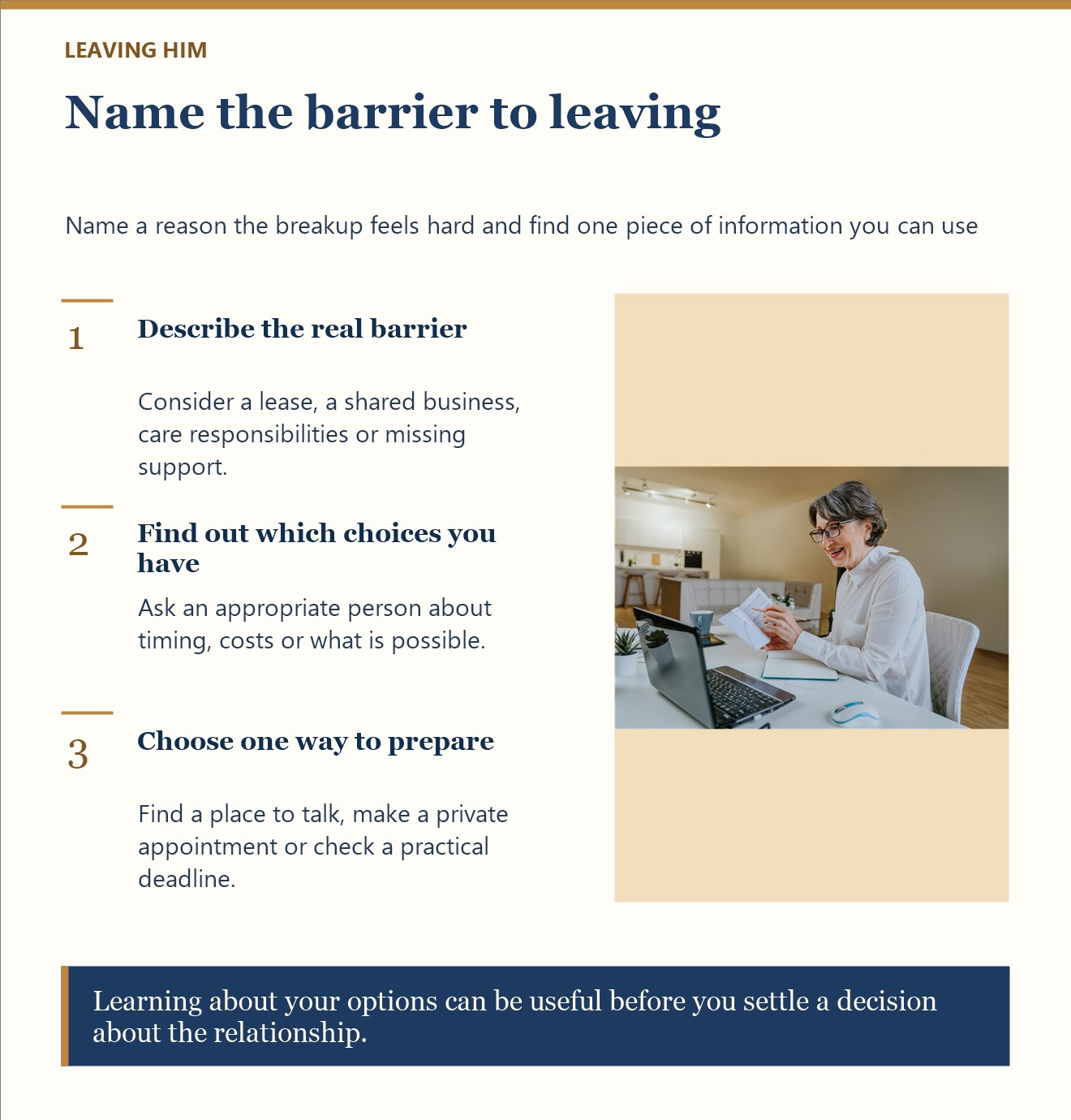
Name the barrier to leaving
Name a reason the breakup feels hard and find one piece of information you can use
- Describe the real barrier Consider a lease, a shared business, care responsibilities or missing support.
- Find out which choices you have Ask an appropriate person about timing, costs or what is possible.
- Choose one way to prepare Find a place to talk, make a private appointment or check a practical deadline.
Learning about your options can be useful before you settle a decision about the relationship.