

You may be considering distance from a partner, relative or friend because the relationship has become draining, hurtful or unsafe. Deciding what to do can be difficult when you also care about the person or depend on them in practical ways.
Start with what is happening and the support you need. You do not have to prove that someone is entirely bad, give a final warning or stay until they agree with your decision.
Name the pattern and its effect on you
Consider specific events: repeated humiliation, ignored limits, threats, pressure or a recurring refusal to discuss a practical problem. How often has it happened, and what follows when you raise it? A difficult feeling is worth noticing, but discomfort alone does not establish another person’s intentions.
You can take the effect on your life seriously without diagnosing the person. Likewise, having stayed, returned or found it hard to object does not make you responsible for their behaviour.

Choose a limit you can act on
A limit might be less contact, ending certain conversations or ending the relationship. Make it about what you will do where you have a choice: “If the conversation becomes insulting, I will end the call.”
You do not need to turn a breakup into a lesson that forces someone to appreciate you. They may disagree or never offer an apology. Your decision can be based on what you want to continue, rather than an outcome you must produce in them.
Put safety before a final conversation
If the person has threatened, monitored or harmed you, seek private specialist support before announcing plans. You do not owe an extra chance, an in-person warning or a test of how they react when you say you will leave.
Where safe, tell a trustworthy person what help would be useful, without assuming family or mutual friends will keep your information private. The guide to leaving an abusive relationship covers questions to discuss with a local advocate. Choose a safer device or contact method if monitoring is a concern.
Decide what distance means in practice
In a friendship, you might decline one-to-one plans or ask for a period without messages. With a relative, you may want shorter visits, limited topics or another person present. A romantic ending may involve different housing and financial arrangements.
Shared care, work, children or legal arrangements can limit the options available. Where safe, separate necessary practical contact from optional personal discussion, and seek suitable local advice when responsibilities are unclear. You do not have to choose the same level of distance forever.
Make practical support specific
Ask for something concrete: a place to make a private call, company at an appointment, help reviewing transport or time to list the next bills. You can seek support without telling every detail of the relationship.
If money is a concern, read planning to leave with limited money. A counsellor or advocate may help you consider choices, but you do not need a particular explanation about childhood or a guarantee of recovery to make a decision.
If the person threatens to harm themselves
Take a threat of suicide or self-harm seriously and seek qualified help; you do not have to promise to stay in the relationship to keep the person safe. If there is immediate danger, contact appropriate local emergency help without putting yourself at risk.
In the United States, you can call or text 988 for help when worried about someone else. Outside the US, use the relevant local crisis service. The National Domestic Violence Hotline discusses suicide threats tied to a partner leaving. A crisis professional or domestic-abuse advocate can help you consider a response; you do not need to manage the situation alone or remain physically present if you feel unsafe.
Leave room for feelings after the decision
Relief, guilt, sadness and doubt may appear together. Missing a person or remembering a good day does not settle whether you want to resume contact. You can revisit a practical plan without treating every difficult feeling as a reason to reverse it.
Keep supportive contact and ordinary routines as manageable as you can. If feelings are interfering with daily life, consider appropriate professional support. Your next step can be small: one conversation with someone safe, one practical arrangement or one limit you want to keep today.
Choose the smallest change that addresses the problem
If a friendship has become difficult because late calls repeatedly turn into insults, you may choose to stop taking calls and be clear about that boundary if it is safe. If the behaviour continues in other ways, consider whether you want further changes and ask someone you trust for help.
Read the infographic in text
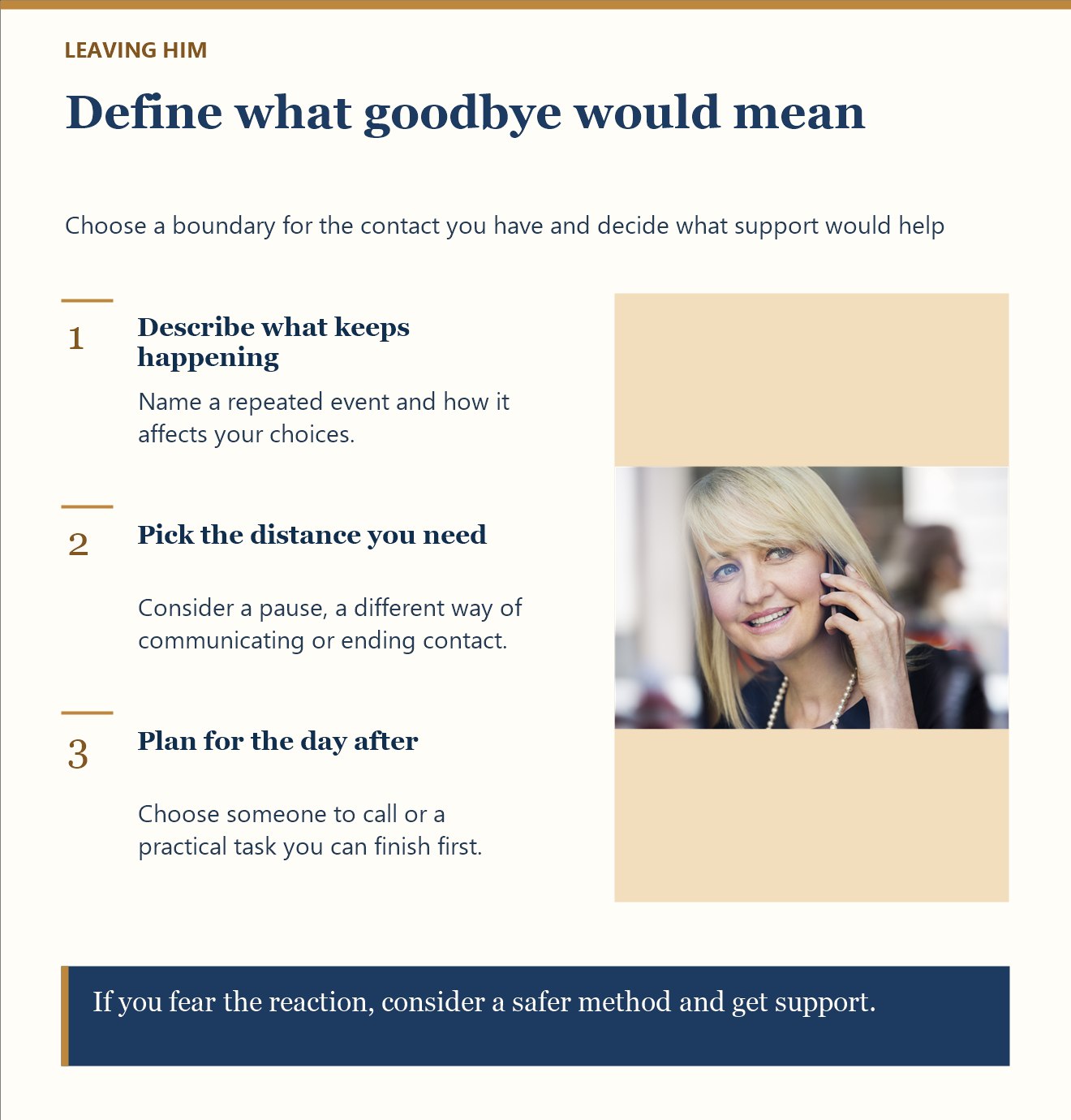
Define what goodbye would mean
Choose a boundary for the contact you have and decide what support would help
- Describe what keeps happening Name a repeated event and how it affects your choices.
- Pick the distance you need Consider a pause, a different way of communicating or ending contact.
- Plan for the day after Choose someone to call or a practical task you can finish first.
If you fear the reaction, consider a safer method and get support.