

Choosing to end a relationship and having someone end it with you can raise different questions. Neither role tells you exactly how much a person is hurting, how long they have been thinking about the breakup or what they will feel later.
You may feel sadness, relief, anger, guilt or uncertainty, sometimes together. Focus on what you know and the decisions you can make rather than comparing whose pain is more legitimate.
You cannot know every unspoken thought
It is understandable to wonder whether the other person is relieved, regretful or missing you. Their public appearance, a photograph or a short message cannot reliably answer those questions.
You also do not have to solve them to make a practical decision. “They ended the relationship” or “I have decided not to continue” gives you a clearer starting point than an imagined account of what the other person must feel.

If the breakup was not your choice
You may want answers, another chance or more time to understand what happened. You can ask a reasonable question where contact is welcome, but the other person may not provide the explanation you hope for.
Respect a clear no or a request to stop contact. You can seek support, change plans and decide which reminders you want to put away without first agreeing with the breakup. The guide to when love is not mutual offers further ways to protect your own boundaries.
If you are choosing to leave
Where safe, be clear about the decision and any immediate practical arrangements. You can be considerate without offering a future reunion you do not want or making friendship a promise to soften the ending.
Allow the other person their response without expecting them to comfort you or agree that you made the right choice. If you fear threats or retaliation, seek private specialist support and choose a safer way to end contact. An in-person final conversation is not a requirement.
Guilt does not decide whether you should stay
Causing disappointment can be difficult even when you no longer want the relationship. Feeling guilty does not by itself establish that leaving was wrong, just as feeling relieved does not prove you never cared.
Consider what you can take responsibility for: clear communication where safe, keeping practical agreements and avoiding unnecessary cruelty. You cannot guarantee that an ending will be painless or make your continued participation the solution to every difficult feeling.
Give memories and daily life some room
Either person may find a familiar place comforting, painful, both or neither. You do not need to avoid every shared location or force yourself to revisit one to prove progress.
Choose manageable activities and company. You might cook a simple meal, read, take a short walk or spend time with someone who does not require a full account of the breakup. Those choices can coexist with sadness; they are not a test of whether you have recovered.
Keep practical tasks separate from the relationship debate
List what needs attention: belongings, bills, housing, children or pet care. Where safe, use a clear practical channel, make specific requests and keep necessary records. Get appropriate local advice about responsibilities or arrangements you cannot resolve together.
A handover does not have to become another conversation about restarting the relationship. You can ask for a safer arrangement or an agreed third party when needed. For more ideas, see practical steps after a breakup.
Get support without ranking the pain
There is no reliable schedule that says the person leaving hurts later while the person left hurts immediately. The NHS information on grief and loss describes different responses to loss, including relationship endings.
If feelings are making daily life difficult, consider suitable professional support. You can talk with someone without proving that your side of the breakup deserves more sympathy. For a next step that does not depend on another person’s agreement, read finding a way forward after a breakup.
Write two short lists after the relationship ends
Make one list for practical matters you need to discuss, such as returning keys, and another for what would help you personally, such as someone to join you on a walk. Use the first list to keep necessary contact specific. You can share the second list with someone who can support you.
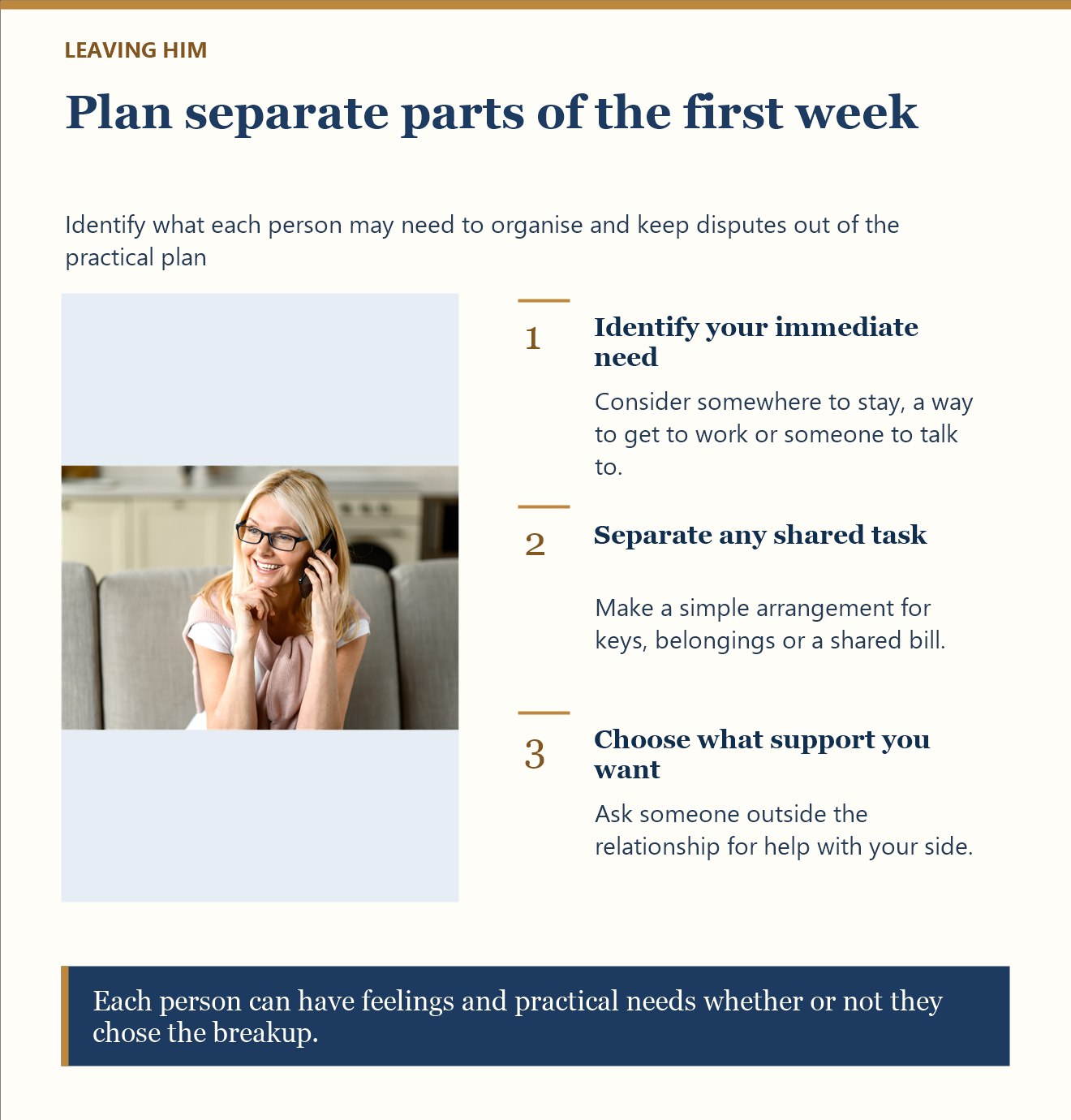
Read the infographic in text
Plan separate parts of the first week
Identify what each person may need to organise and keep disputes out of the practical plan
- Identify your immediate need Consider somewhere to stay, a way to get to work or someone to talk to.
- Separate any shared task Make a simple arrangement for keys, belongings or a shared bill.
- Choose what support you want Ask someone outside the relationship for help with your side.
Each person can have feelings and practical needs whether or not they chose the breakup.