

After a breakup, it can help to make a few practical choices while giving your feelings room to settle. A list of things you must “never” do can become another source of pressure when your circumstances need a more flexible plan.
Start with safety, necessary responsibilities and one manageable change. You do not have to stop caring, finish grieving on schedule or make the same contact choices as everyone else.

Pause before a message you do not want to send
If you are upset, angry or have been drinking, you can wait before sending a personal message. Write a private draft if that is appropriate for your circumstances, or ask a trusted friend for company while the urge passes. Avoid posting it publicly or involving mutual friends in a confrontation.
Keep access to essential contacts and emergency help. The aim is to make an impulsive conversation less likely, not to surrender control of your phone or cut yourself off from support.
Choose limits for contact and reminders
Consider which messages are necessary and which are optional. If you share children, work or housing, a clear practical channel may be more useful than a blanket rule to block everything. Existing legal arrangements and safety concerns can affect the options; get suitable local advice when needed.
You can mute updates, archive chats or ask friends not to give you news about your ex. Curiosity does not make you a bad person, but repeated checking may be something you want to change. Respect privacy: do not access accounts, track someone’s location or ask others to investigate a new partner.
Allow feelings without a deadline
You do not have to finish grieving in four days, look cheerful for others or turn every painful thought into a lesson. Relief, sadness, anger and a good afternoon can exist alongside one another.
The NHS information on grief and loss includes relationship endings and explains that people respond differently. If feelings are making everyday life hard, professional support is an option; needing help is not a failure to move on quickly enough.
Make daily care manageable
Choose small, realistic actions: something to eat, rest, a shower or a little movement that suits your energy and access needs. You do not need an exercise class, a new wardrobe or a costly routine to take care of yourself.
For more ideas, see making room for your own care. If work or study is difficult, consider one practical adjustment and a suitable person to ask about it. Check confidentiality and available policies before sharing details at work.
Handle belongings and shared tasks carefully
Put reminders out of everyday view if that helps. Keep other people’s belongings, important documents and shared records separate from things you are free to discard. Arrange a return method that is safe and workable; you do not owe a private meeting to collect a sweatshirt.
Write down urgent shared tasks such as bills, a tenancy or pet care, then get appropriate advice about responsibilities you cannot resolve together. A difficult conversation does not have to settle the entire history of the relationship.
Keep friendship, sex and dating freely chosen
You do not have to offer friendship to soften a breakup. Friendship can also be something you both choose later, with clear boundaries and without a hidden agreement to restart romance. Read about friendship when feelings are unequal if expectations are getting mixed.
There is no universal waiting period before dating again. Be honest about what you can offer, and do not use a new person to provoke jealousy. Likewise, sexual contact with an ex is not proof of reconciliation; consider whether it matches your wishes and whether expectations are clear.
Accept support without making revenge the project
You can talk about hurt with a trusted person without asking them to take sides or carry messages. Keep some contact that is about ordinary life too, at a pace you can manage. If a friend cannot offer the support you need, consider another suitable source rather than treating that as proof you are alone.
Anger can tell you something mattered. Feeling it is different from acting to punish someone. Avoid threats, exposing private material or involving a new partner in a dispute. You can choose a protective boundary without needing your ex to regret the breakup.
Choose one change for the next day
Try a specific, reversible step: mute updates for now, arrange a meal with someone supportive or list the practical matters that need attention. Review whether it helps instead of checking whether you have stopped thinking about your ex entirely.
If you feel threatened or unsafe, seek private specialist support rather than arranging a final confrontation. For emotional closure that does not depend on another person’s response, see finding a way forward after a breakup.
Read the infographic in text
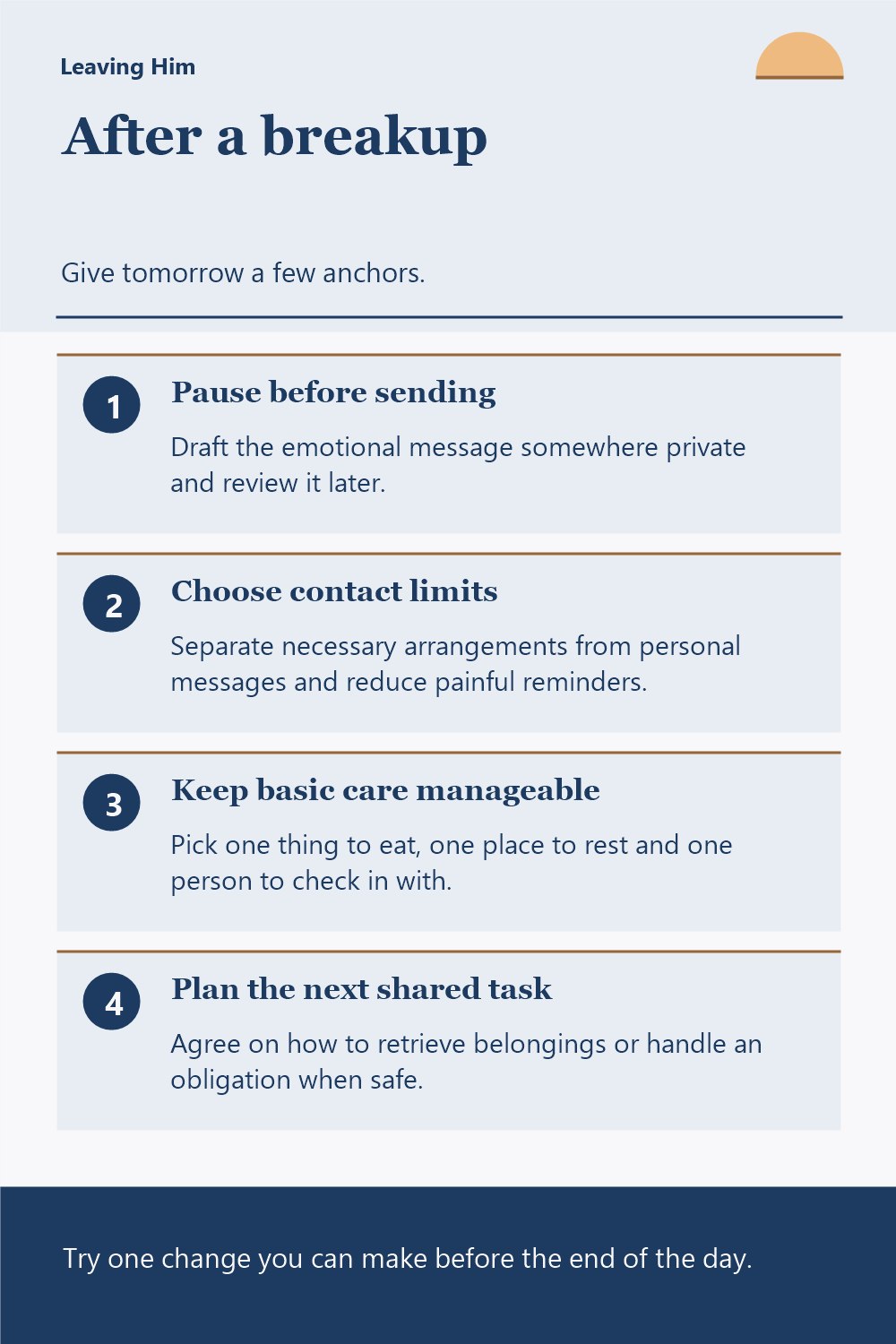
After a breakup
Give tomorrow a few anchors.
- Pause before sending Draft the emotional message somewhere private and review it later.
- Choose contact limits Separate necessary arrangements from personal messages and reduce painful reminders.
- Keep basic care manageable Pick one thing to eat, one place to rest and one person to check in with.
- Plan the next shared task Agree on how to retrieve belongings or handle an obligation when safe.
Try one change you can make before the end of the day.