

Disrespect from your child’s father can leave you managing hurt feelings alongside school runs, handovers and decisions that still need an answer. You do not have to earn courteous treatment by being endlessly patient, and another adult’s harmful behavior is not your fault.
Start with the behavior and its effect on you and your child. A missed reply, a disagreement about plans and a threat require different responses. The aim is to make necessary arrangements clearer and safer, while getting appropriate help for problems you cannot resolve alone.
On this page
1. Name the practical problem
Describe what happened without needing to prove what he secretly thinks. For example: “The collection time changed twice without notice,” or “He called me names during the handover.” Specific descriptions make it easier to identify what needs attention.
Dating someone new is not itself evidence of neglect or disrespect. The relevant questions include whether agreed responsibilities are met, whether your child is cared for and whether either of you is being intimidated or harmed. Focus on those concerns rather than trying to direct an ex-partner’s private life.
Separate requests from responsibility
You can request a confirmed collection time or an answer about a school form. You cannot make another person become reliable through the right explanation. His response remains his responsibility; difficulty obtaining cooperation does not mean you caused the problem.

2. Choose a workable communication boundary
Where communication is safe, consider keeping routine messages brief, factual and about one child-related issue at a time. A written channel may help you keep track of arrangements, but choose one that fits your situation and any existing requirements.
For example: “Please confirm by 6 p.m. whether you can collect Sam at 4 p.m. tomorrow. If that time does not work, please suggest another option.” You do not have to answer an unrelated insult in the same exchange.
End an insulting exchange when you can
A boundary might be: “I can discuss the school trip. I will end this call if the name-calling continues.” Use that wording only if it feels safe. A calm response does not guarantee that the other person will calm down, and you are not required to remain in an intimidating conversation.
Consider access and privacy before blocking
Blocking every route of contact may complicate necessary arrangements or conflict with a parenting order. If contact is abusive, get advice about safer communication and urgent protection rather than relying on a blanket rule. If a device or account may be monitored, seek help using a safer device when possible.
3. Keep your child out of the dispute
A child should not have to carry hostile messages, report on another household or comfort a parent through adult conflict. Deal directly with the relevant adult or professional where possible. You can acknowledge that something upsetting happened without asking your child to choose a side.
If a visit is cancelled, give an age-appropriate account of what you know: “The plan changed. I know you were looking forward to it.” Avoid promising a replacement visit before it is confirmed. Make room for disappointment, affection for the other parent or mixed feelings.
Support does not require doing everything alone
Consider a trusted adult, school contact or suitable child-support professional if your child needs someone else to talk to. The US National Domestic Violence Hotline offers guidance on supporting children when abuse is involved, including planning for their safety. A child is not responsible for stepping into an adult confrontation.
4. Get help with arrangements and safety
Questions about support payments, parenting time and changing an order need advice appropriate to your location and circumstances. A qualified local family-law professional or legal-aid service can explain options. Do not assume a court will provide a particular outcome or change arrangements based on a general article.
If safe, keep a factual record of missed arrangements, relevant messages and concerns about your child’s care. Store it somewhere the other person cannot access. Ask an adviser what information is useful and lawful to retain; do not provoke incidents or make unsafe recordings to gather evidence.
Threats, stalking, violence or fear of retaliation call for individual safety support. Seek a domestic-abuse service to discuss options, including handovers and communication. You do not have to confront him, arrange mediation or announce plans to leave to prove you tried hard enough. If anyone is in immediate danger, contact local emergency services when safe to do so.
5. Choose your next manageable step
Choose one unresolved issue: tomorrow’s collection, a school deadline, a safety concern or finding an adviser. Decide who can help and what needs attention first. A practical next step can be small, such as finding a reliable contact number or asking someone you trust to sit with you while you make a call.
You can feel angry, exhausted or sad while still caring for your child. You do not have to appear unbothered or be “the bigger person” in every exchange. Support and clear limits can make room for your needs as well as your child’s.
Keep a teacher conference out of a personal dispute
A practical note could say, “The teacher offered Wednesday at 5 or Thursday at 4. Please use the school’s form by Friday if you can attend.” Don’t ask your child to relay criticism or confirm whether the other parent replied. If there is an order or safety arrangement, use the communication route it sets out. Justice Canada’s parenting plan checklist is one example of the topics local advice can help you discuss.
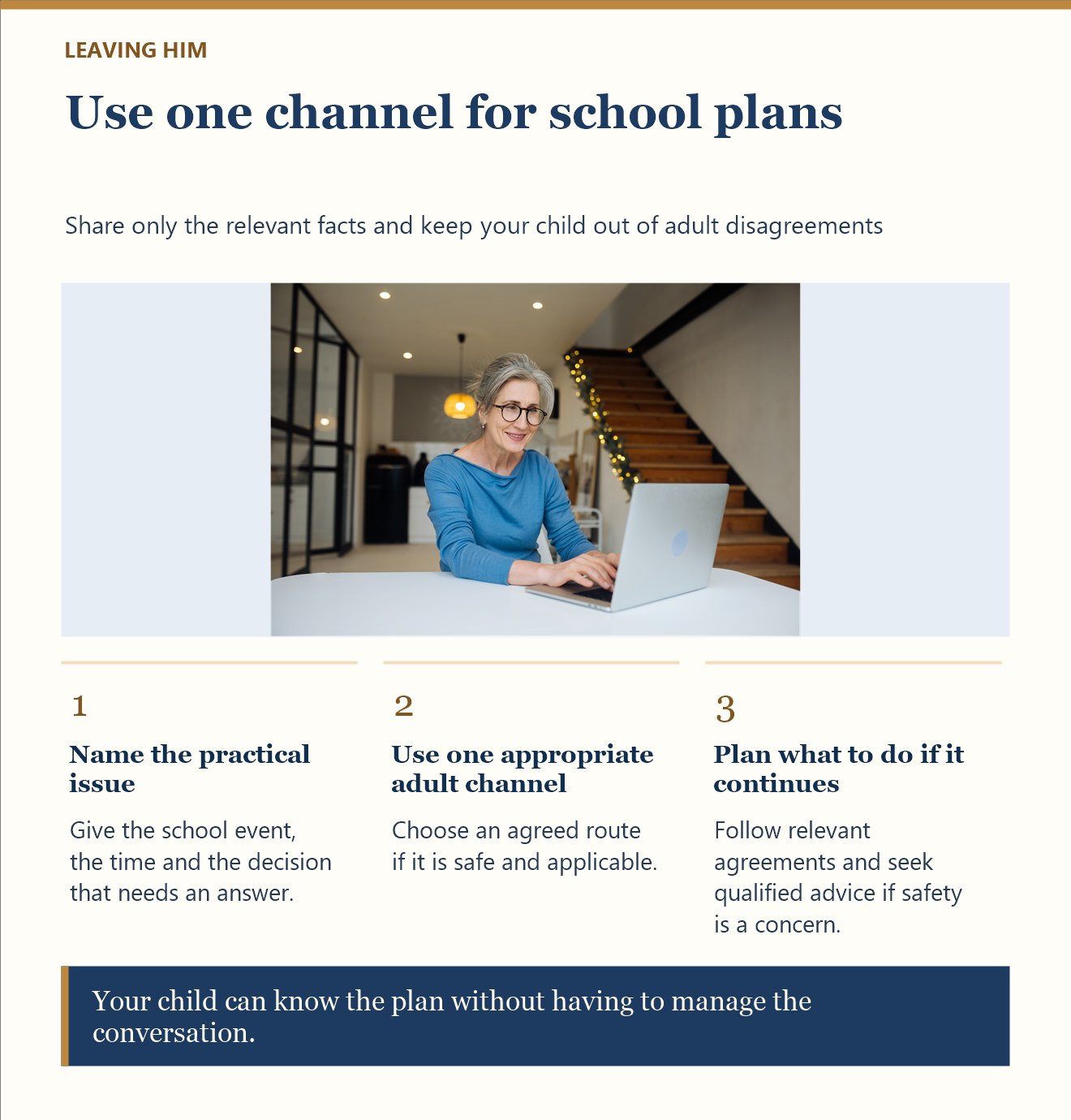
Read the infographic in text
Use one channel for school plans
Share only the relevant facts and keep your child out of adult disagreements
- Name the practical issue Give the school event, the time and the decision that needs an answer.
- Use one appropriate adult channel Choose an agreed route if it is safe and applicable.
- Plan what to do if it continues Follow relevant agreements and seek qualified advice if safety is a concern.
Your child can know the plan without having to manage the conversation.