

Learning that someone does not want the relationship you hoped for can hurt, even if you never dated. You may feel disappointed, embarrassed, relieved to know or unsure how to act around them. Your feelings deserve care without making the other person responsible for returning them.
Moving on does not require a quick, painless recovery or a transformation into someone more desirable. Start with the answer you have, the contact you can manage and one part of your own life that needs attention.
On this page
1. Work with the answer you have
If someone has said they do not want to date, respect that answer. You do not need to predict whether they will feel differently years from now. The relationship you want is not being offered now, and you can make choices on that basis.
If you have never discussed your interest and an invitation would be appropriate, you can ask clearly once. “Would you like to go on a date?” gives the person room to answer. Repeated questions, gifts or attempts to make them jealous add pressure after a no.
It can help to separate an observation from a wish: “They enjoy talking with me” may be true, while “That means they will eventually want a relationship” is still a hope. Our guide to clear answers and boundaries when love is not mutual explores that distinction in more detail.

2. Give difficult feelings some room
You are allowed to be upset about a hoped-for relationship ending before it began. You do not have to earn the right to feel sad by proving that the connection was serious enough. At the same time, declining romance is a choice the other person is allowed to make.
Try naming the feeling and the part that hurts: “I feel disappointed because I pictured sharing more of my life with them.” That is more specific than treating their answer as a verdict on your whole personality or future.
You might talk, write a brief private note, listen to music or simply let a difficult evening be difficult. If writing or rereading messages keeps you circling the same question, pause and choose another activity. There is no requirement to analyse every detail or turn the experience into a lesson.
Keep private reflections private unless there is a clear, welcome reason to share them. A long explanation of your pain should not become another request for the person to reconsider.
3. Make daily life more manageable
Look at what has been crowded out while your attention has been on this person. You might need a regular meal, help with a task, a manageable bedtime or time for an interest you enjoy. Choose something that fits your abilities, resources and responsibilities.
A small plan can be concrete:
- Arrange one ordinary activity for a time when you usually check their updates.
- Keep an existing plan with a friend instead of leaving the evening open in case they call.
- Put a conversation out of immediate view if you keep rereading it, while keeping any information you actually need.
- Make tomorrow’s essential task easier, such as preparing what you need before work or asking someone to share a responsibility.
Movement or a hobby may be enjoyable, but you do not need to change your body to become worthy of affection. An activity can give part of the day structure without removing every difficult feeling. You are allowed to adapt a plan or choose rest.
4. Ask for company and choose contact limits
Be specific with someone you trust: “Could we have lunch without analysing their messages?” or “I would like to talk for a little while, then do something else.” Ask whether they have room to listen, and keep more than one possible source of support in mind.
You can also ask friends not to bring you updates or arrange encounters. They do not need to investigate the other person’s dating life or persuade them on your behalf.
Friendship is optional for both of you. You might want some distance, prefer group activities or decide that close contact is too difficult for now. If you share work, study or a social circle, civil, practical conversation can be enough; you do not have to seek extra time together.
A clear limit could be, “I respect your answer. I need some space, so I won’t be meeting one-to-one for a while.” Treat that space as room for your own life. Do not use it as a test of whether the person misses you, and respect any limits they have stated too.
5. Notice progress without a deadline
Look for ordinary changes: you spent less time checking updates, finished a task or enjoyed a conversation about something else. A difficult day later does not erase those moments. You do not have to stop thinking about the person completely before making a useful choice.
Review what is helping and what needs adjusting. Perhaps an online connection needs muting, a shared activity needs a pause or a quiet part of the week needs more company. Keep the change practical and respectful of both people’s privacy.
If sadness, anxiety or loss of interest is making sleep, concentration or usual activities difficult, consider speaking with a healthcare professional. The National Institute of Mental Health’s guide to caring for your mental health describes everyday care and signs that professional support may be useful. You can ask for help whenever you are concerned.
You may eventually want to date, prefer a break or remain unsure. A future relationship is not something anyone can promise, and it does not need to become the measure of your recovery. Choose one manageable action for today while leaving those larger decisions open.
Prepare for a group gathering after hearing no
If you expect to see the person at a shared friend’s birthday, choose which part of the gathering you want to attend and how you might leave. Ask a friend to sit with you if that would help. You don’t need to explain your private feelings to everyone there.
Read the infographic in text
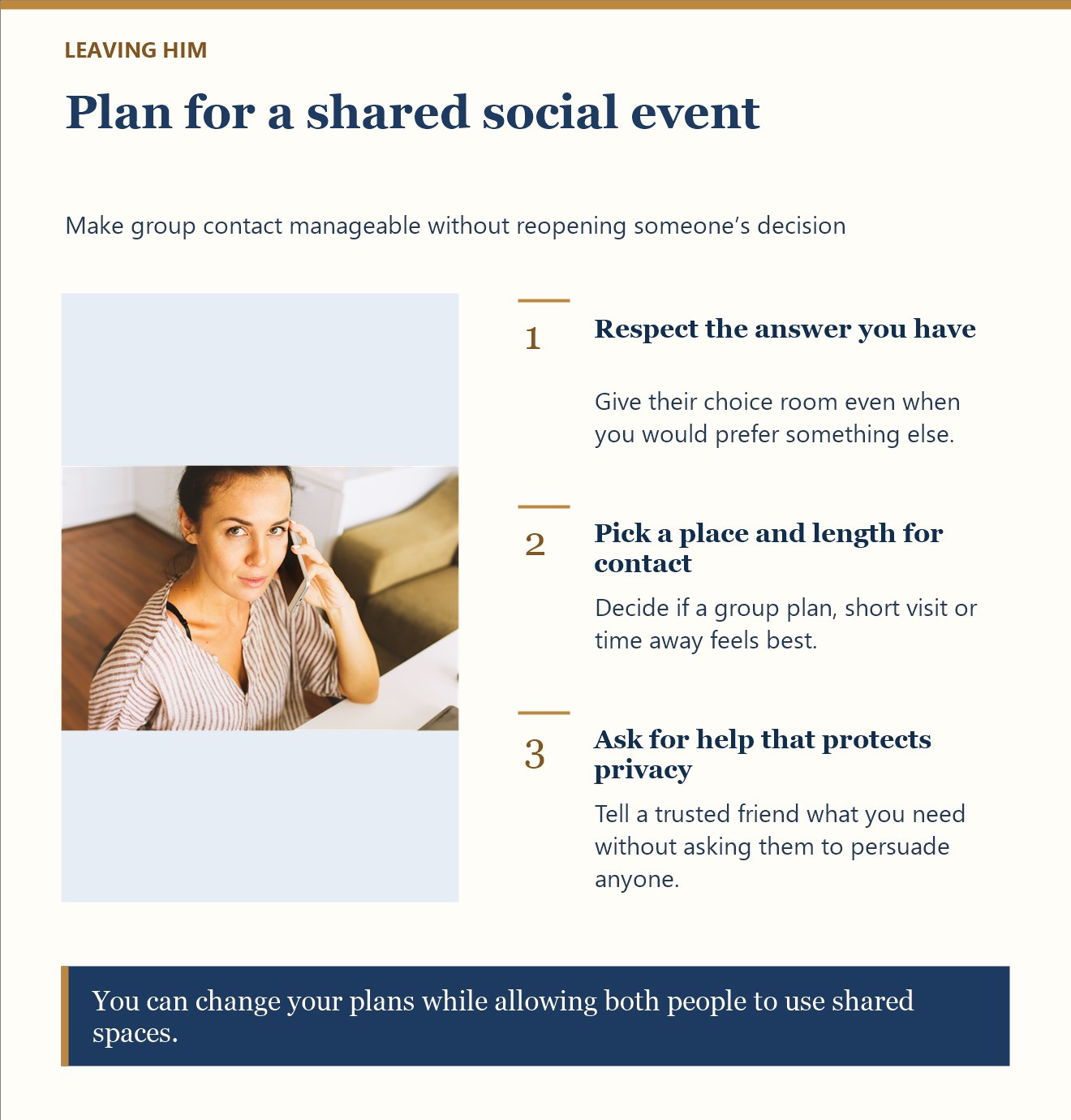
Plan for a shared social event
Make group contact manageable without reopening someone’s decision
- Respect the answer you have Give their choice room even when you would prefer something else.
- Pick a place and length for contact Decide if a group plan, short visit or time away feels best.
- Ask for help that protects privacy Tell a trusted friend what you need without asking them to persuade anyone.
You can change your plans while allowing both people to use shared spaces.