

It can be confusing to miss someone who treated you badly. You may remember warmth, humour or good days alongside the behaviour that made the relationship difficult.
Getting through that mix does not require calling yourself foolish, excusing what happened or deciding the person has no good qualities. Focus on what you experienced and what you want to do next.

Name what hurt without judging yourself
Start with the behaviour: insults, broken agreements, dismissive replies, pressure or something else you did not want in your life. “They cancelled three plans without telling me” gives you more to work with than deciding whether the person was entirely good or bad.
You may have noticed the problem later than a friend did. That does not make you foolish or responsible for someone else’s conduct. You can learn from the experience without turning the review into another way to criticize yourself.
Let good memories and painful facts coexist
A person may have been funny, generous or reliable in some situations and hurtful in others. You do not need to erase the good memories to take the harmful behaviour seriously.
Missing a particular quality does not mean you must resume the relationship. Honesty can be expressed respectfully; cruelty is not proof that someone is more truthful. Likewise, someone’s kindness to another person does not cancel a boundary they ignored with you.
You do not need to uncover a hidden reason
You might wonder whether insecurity, fear or a difficult past explains what happened. Unless the person tells you, those are possibilities rather than facts. An explanation would not make you responsible for repairing them or accepting more of the same behaviour.
Bring the question back to your choice: “What happened when I raised a concern, and what would need to change for me to consider contact?” You can decide you want distance even if you never understand the person’s motives.
Choose contact boundaries that fit your circumstances
If optional messages or social updates keep drawing you into the same uncertainty, consider a pause, muting an account or asking friends not to send news. You can keep the explanation brief and avoid turning distance into a test of whether the person will chase you.
Shared work, children, housing or belongings may require some contact. Keep it focused where safe and seek suitable advice about arrangements that affect your responsibilities. If threats, monitoring or retaliation are a concern, use the personal safety-planning guide to identify questions for private specialist support.
Ask for support that does not shame you
A useful friend can listen without saying “I told you so” or making every conversation about your ex. You might ask for company, help with a practical task or an evening where you talk about other things.
Choose an ordinary activity you want to return to, whether that is tending plants, reading, cooking or meeting someone for a short walk. You do not have to enjoy it immediately or use it to prove that you have recovered. For contact-specific ideas, read letting go of an ex while managing necessary contact.
Decide what you want to carry forward
You might keep one preference clearer for future relationships: respectful disagreement, reliable plans or room to say no. A boundary can become more specific without becoming a promise that you will never be hurt again.
There is no fixed deadline for no longer missing someone. The NHS guide to grief and loss recognizes relationship endings as a kind of loss and describes support when feelings are hard to manage. One next step could be arranging a supportive conversation and deciding which contact you want to pause today.
Ask a friend to support you without passing on updates
If mutual friends keep explaining why the person acted as they did, try, “I don’t want more updates. I’d appreciate company at the workshop on Saturday.” If the person harmed or frightened you, choose a source of support that will respect your privacy and safety.
Read the infographic in text
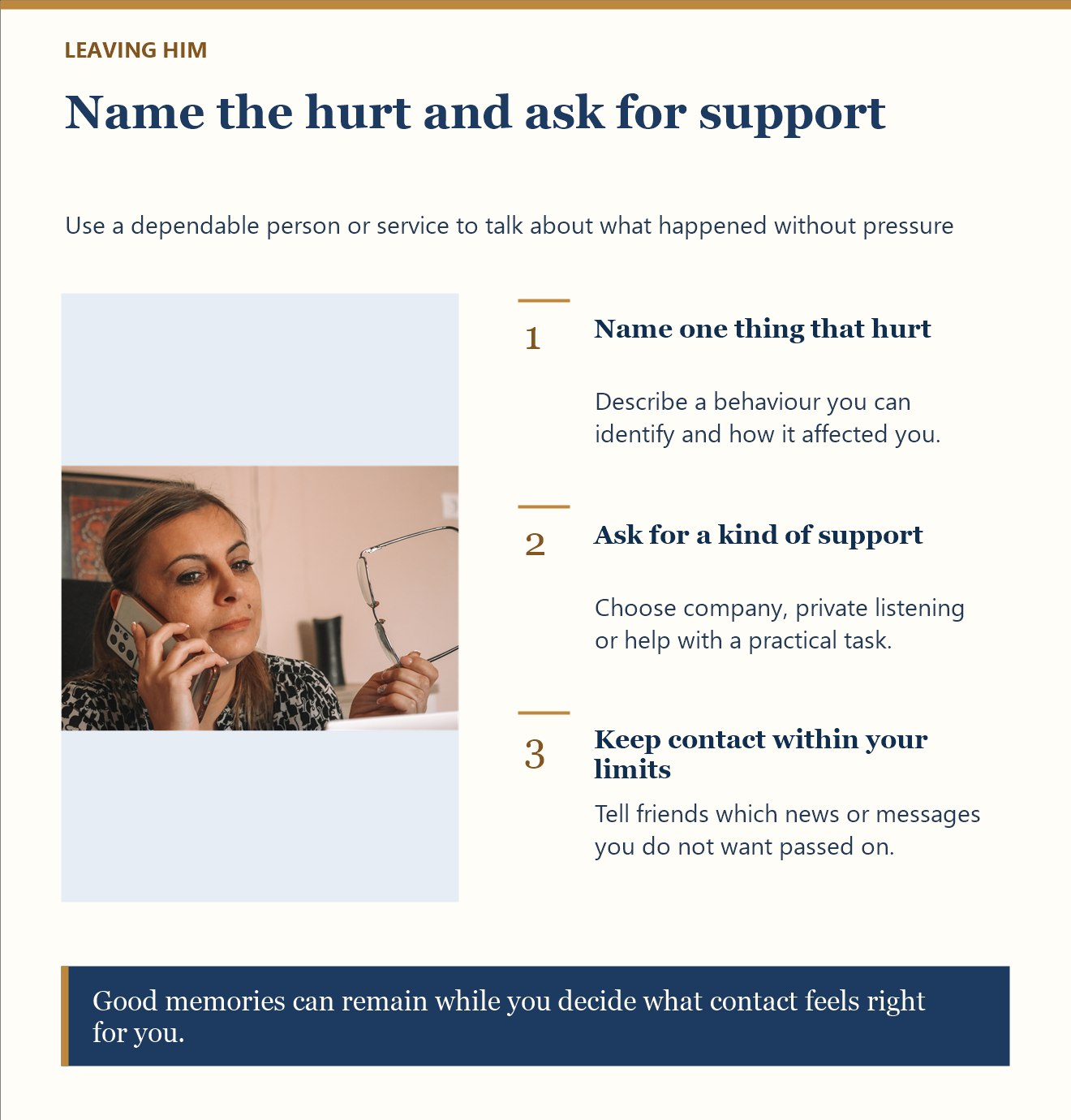
Name the hurt and ask for support
Use a dependable person or service to talk about what happened without pressure
- Name one thing that hurt Describe a behaviour you can identify and how it affected you.
- Ask for a kind of support Choose company, private listening or help with a practical task.
- Keep contact within your limits Tell friends which news or messages you do not want passed on.
Good memories can remain while you decide what contact feels right for you.