

If you want to end an affair, you can make that decision without first creating an argument, demanding gifts or trying to make the other person reject you. A clear boundary can be enough, even when feelings remain complicated.
Consider what you want from a relationship now, what contact is necessary and what support would make the ending more manageable. You can take responsibility for your choices without defining yourself by a label or a promise about the future.
Decide what you want to end
Be clear with yourself about the decision: the sexual relationship, secret meetings, personal messages or the entire connection. Consider what has actually been agreed rather than relying on a promise that someone will eventually become available.
You do not need to prove that the person will never change. You can decide that the current arrangement does not meet your needs. Their response may be disappointing or persuasive, but your choice does not depend on finding words that make them agree.

Use a clear message where it is safe
A brief statement may be enough: “I have decided to end this relationship. I do not want further personal contact.” Avoid offering another encounter or a future reunion you do not want in order to soften the answer.
You can choose a communication method that fits the circumstances. If you fear threats, exposure, monitoring or retaliation, seek private specialist support before announcing plans. You do not owe an in-person confrontation. The guide to planning for safety and support offers questions for a local advocate.
Plan contact boundaries you can maintain
Consider which contact is optional and which may be necessary for work, belongings or another shared responsibility. Where safe, keep essential messages specific and practical. A workplace task does not have to become a private conversation about restarting the affair.
You might mute or block optional contact, decline private meetings or ask a trustworthy person for support when you expect to feel tempted to reply. Choose limits for your own use, rather than a pause designed to make the other person chase you.
Separate practical needs from gifts or pressure
Do not demand gifts, money or extra time as a strategy to provoke rejection or fund the ending. A fight may complicate the situation without making your own wishes clearer.
List any belongings, shared payments or financial dependence that need attention. Get suitable local advice about responsibilities or disputed property; do not assume that a gift or a promise gives you a reliable financial plan. The guide to leaving with limited money can help you identify practical questions.
Attend to privacy and sexual health
Keep private photographs, messages and other intimate material out of public disputes. Do not use disclosure as a threat or recruit others to harass a partner or spouse. If sharing information raises safety or practical concerns, seek appropriate confidential advice before acting.
If you have had sexual contact, consider your own healthcare needs. The CDC guide to STI testing explains that infections may have no symptoms and testing needs vary. A healthcare professional can advise on your circumstances without your having to settle every relationship question first.
Accept support without turning the ending into punishment
You may miss the person or feel grief, guilt, anger or relief. Those feelings do not require another meeting or a dramatic final exchange. Choose someone who can help you think clearly without shaming you or making excuses for choices you want to change.
Give yourself room for ordinary routines and interests. Dating someone new is optional, not a required distraction. For another perspective, read about self-respect and caring for yourself.
Choose one practical next step
You might draft a clear ending message, arrange a safe return of belongings or ask someone supportive to be available afterward. If you have already ended it, choose the contact boundary you want to keep today.
You cannot guarantee that there will be no difficult feelings or that a new relationship will follow. You can make a considered choice about what you participate in now, and get support if the aftermath is hard to manage.
Make an exception for work without reopening the relationship
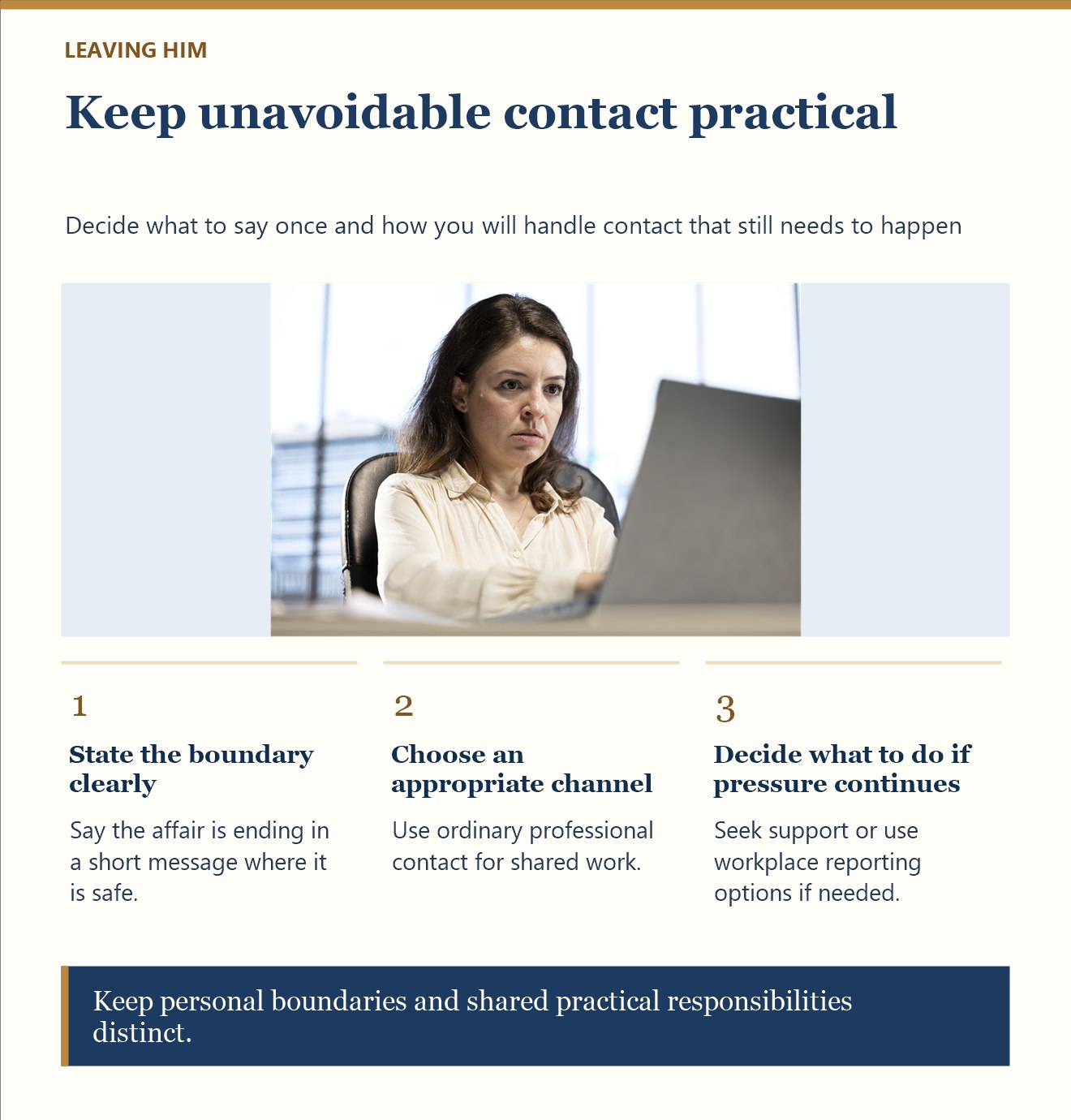
If you work together, you could say, “I’m ending our personal relationship. Please use our usual work channel for project matters.” If you receive a personal message while you’re closing out a shared project, you can maintain the boundary and use appropriate support if the contact becomes threatening or harassing.
Read the infographic in text
Keep unavoidable contact practical
Decide what to say once and how you will handle contact that still needs to happen
- State the boundary clearly Say the affair is ending in a short message where it is safe.
- Choose an appropriate channel Use ordinary professional contact for shared work.
- Decide what to do if pressure continues Seek support or use workplace reporting options if needed.
Keep personal boundaries and shared practical responsibilities distinct.