

Being ghosted usually means that someone stops communicating without explaining that they want contact or the relationship to end. The uncertainty can be painful, especially when plans or expectations had seemed clear.
Silence does not tell you exactly why the person withdrew. You can decide what contact you want next without solving their motives or treating their response as a measure of your worth.

Separate what happened from what you are guessing
Write down the facts you have: a message has gone unanswered, a plan was missed or a pattern of regular contact stopped. A delayed reply on its own does not establish that someone has ended a relationship. Equally, you do not have to wait indefinitely for an explanation before changing your own plans.
You may wonder about fear, another relationship, overwhelm or lack of interest. Without information from the person, those remain possibilities. Their silence cannot establish that you caused the withdrawal or that you need to become more appealing to get an answer.
Decide whether one clear check-in is useful
If contact had been welcome and there is no request to stop, you might send a brief message: “I have not heard from you and I am unsure whether you want to keep seeing each other. Please let me know.” You can also decide not to send another message.
If the person has already said no, asked for space or blocked you, respect that boundary. Do not use a different number or account to get around it. There is no universal number of hours that settles the situation; choose how long you are willing to leave plans open, then make arrangements that work for you.
Make room to stop checking
You can mute updates, put a conversation out of immediate view or ask a friend for company while you resist checking again. Keep access to essential contacts and support. A pause is for your own use, rather than a tactic to make the other person chase you.
Avoid location tracking, account access or asking mutual friends to investigate a new partner. You can speak about your feelings with someone you trust without recruiting them to carry messages. The guide to letting go while managing necessary contact offers more contact-boundary ideas.
Separate shared responsibilities from personal answers
Housing, children, work or belongings may still need attention. Where safe, keep a practical message specific: which item needs a decision, what information is required and an appropriate way to respond. An urgent bill and a conversation about why the relationship ended are different matters.
Keep relevant records and get suitable local advice if responsibilities or existing arrangements are unclear. A professional or agreed third party may be more useful than repeated personal messages. Do not assume that being ignored cancels financial, parenting or legal obligations.
If the person returns, ask what they want now
A later message does not automatically explain the silence or restart the relationship. You can ask what happened, say how it affected you and decide whether you want to talk further. Listen without treating an apology as a requirement to resume dating.
Consider whether current expectations and follow-through fit what you want. You can decline renewed contact even if the explanation sounds understandable. For more on that choice, read when someone returns after you have moved on.
If you are the person ending contact
When it feels safe and appropriate, a brief clear message can avoid leaving plans unresolved: “I do not want to continue dating. I wish you well.” You do not need to debate attraction or offer friendship you do not want.
If you fear threats, harassment or retaliation, an in-person explanation is not a requirement. Seek private support and choose contact limits around safety. A person’s wish for an answer does not entitle them to continued access after you have said no.
Give an unanswered plan a clear expiry time
If you had planned to attend a ticketed event together, you could write, “I haven’t heard back, so I’ll make other plans if I don’t hear from you by noon.” Use this only if contact is still welcome. You can keep your evening open for something else even if the bigger questions remain.
Read the infographic in text
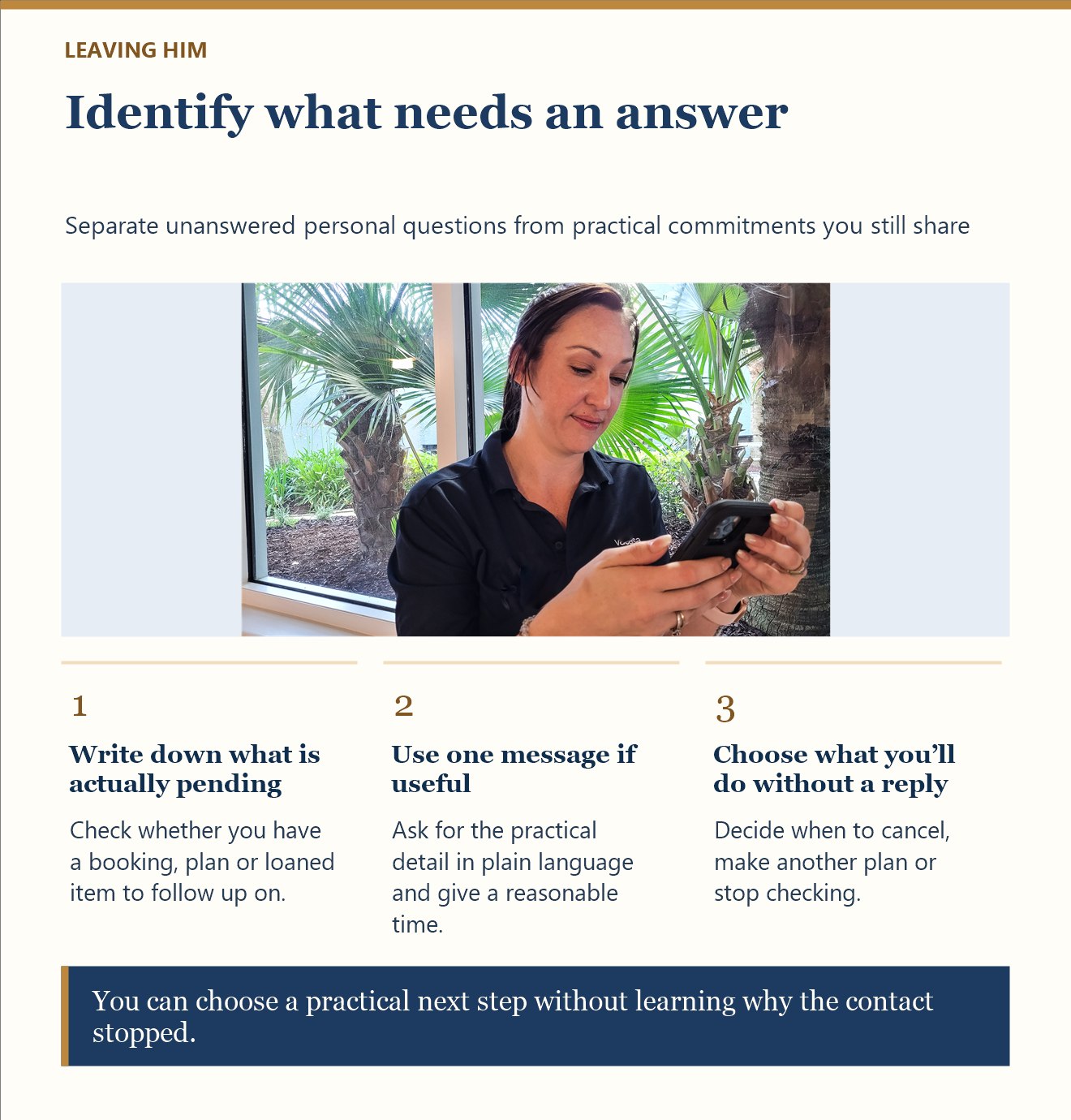
Identify what needs an answer
Separate unanswered personal questions from practical commitments you still share
- Write down what is actually pending Check whether you have a booking, plan or loaned item to follow up on.
- Use one message if useful Ask for the practical detail in plain language and give a reasonable time.
- Choose what you’ll do without a reply Decide when to cancel, make another plan or stop checking.
You can choose a practical next step without learning why the contact stopped.