

A relationship label can help you describe a connection, but the word alone does not settle what you have agreed. Two people may both say “partner” while meaning different things about exclusivity, time together or future plans. Others may prefer no label and still make clear, considerate agreements.
If the arrangement feels uncertain, focus on what you need to understand. You can want a committed relationship, prefer something casual or remain undecided without treating another preference as less respectable. The important question is whether the people involved understand and freely choose what is happening.
On this page
Explain what a label means to you
You might want a word because it helps you feel understood, introduce someone to friends or know whether you are building a future together. Try to name the need: “Calling this a relationship matters to me because I want to know we are both choosing an ongoing partnership.”
Ask what the other person means too. They may dislike a particular term, be uncertain about the connection or want an arrangement different from yours. You cannot tell which explanation applies simply because they avoid a label.
A connection sometimes called a “situationship” may feel comfortable to the people involved, confusing to one of them or unsuitable for both. The term describes uncertainty for some people; it does not establish anyone’s character or predict how the relationship will end.

Discuss the agreements behind the word
Choose the questions that matter to your situation. You do not need to negotiate your whole future in one sitting, but you should not have to rely on guesses about important expectations.
- Exclusivity: Have you agreed to date only each other, or are other connections part of the arrangement?
- Time and contact: What can each person realistically offer, and how will you confirm plans?
- Privacy: What are you comfortable sharing with friends, family or online?
- Direction: Are you exploring an ongoing relationship, choosing something casual or still deciding?
A label does not give someone access to your passwords, private history or body. Consent to affection or sex remains specific and freely chosen. Likewise, an arrangement without a label still requires honesty, respect and the freedom to say no.
Ask a direct question about the relationship
Choose a time when you can both pay attention. You might say, “I have enjoyed spending time together. I would like an exclusive relationship. Is that something you want with me?” Or, “I am comfortable keeping this casual, but I want us to be clear about what that means.”
Give the person room to answer in their own words. Listen for an actual preference or proposal rather than trying to persuade them to use the right phrase. You can ask a follow-up question if the answer is unclear.
If they need time, consider whether you want to wait and what would make that period workable. You might agree to return to the discussion after a particular event or at a mutually chosen time. A check-in is an opportunity to clarify, not a promise that their feelings will change.
Take different answers seriously
“I do not want a relationship” is information to consider, even if the person is affectionate or enjoys spending time with you. Warmth does not cancel their stated preference. Equally, wanting a label does not make you demanding or mean you should accept indefinite uncertainty.
Ask yourself whether the arrangement available now meets your needs. You can decline a casual connection without condemning it, or decline commitment without offering false hope. A mismatch can be painful without either person being wrong for wanting something different.
Be cautious about agreeing to terms you do not want in the hope that patience will eventually earn commitment. You are allowed to change your mind and end an arrangement that no longer works for you. The other person has that freedom too.
Review what happens and choose what fits
After a conversation, look at whether your agreements are understood and followed. If plans change, discuss them rather than assuming the original word covers every new situation. Reliability, room for disagreement and consideration in daily life matter alongside the name you choose.
If questions bring ridicule, threats or pressure, seek support from someone you trust. You do not need to make a perfect case for your preference before taking discomfort or fear seriously.
Clarity may lead to a shared label, a clearer arrangement without one or a decision to stop dating. The useful outcome is an informed choice you can live with, rather than a title obtained at the cost of your own needs.
Ask about a practical choice behind the label
Try, “If we call each other partners, what do we want to tell our friends, and are we agreeing to date only each other?” Choose language that suits both of you while keeping specific commitments clear. Leave the question open if either of you needs more time.
Read the infographic in text
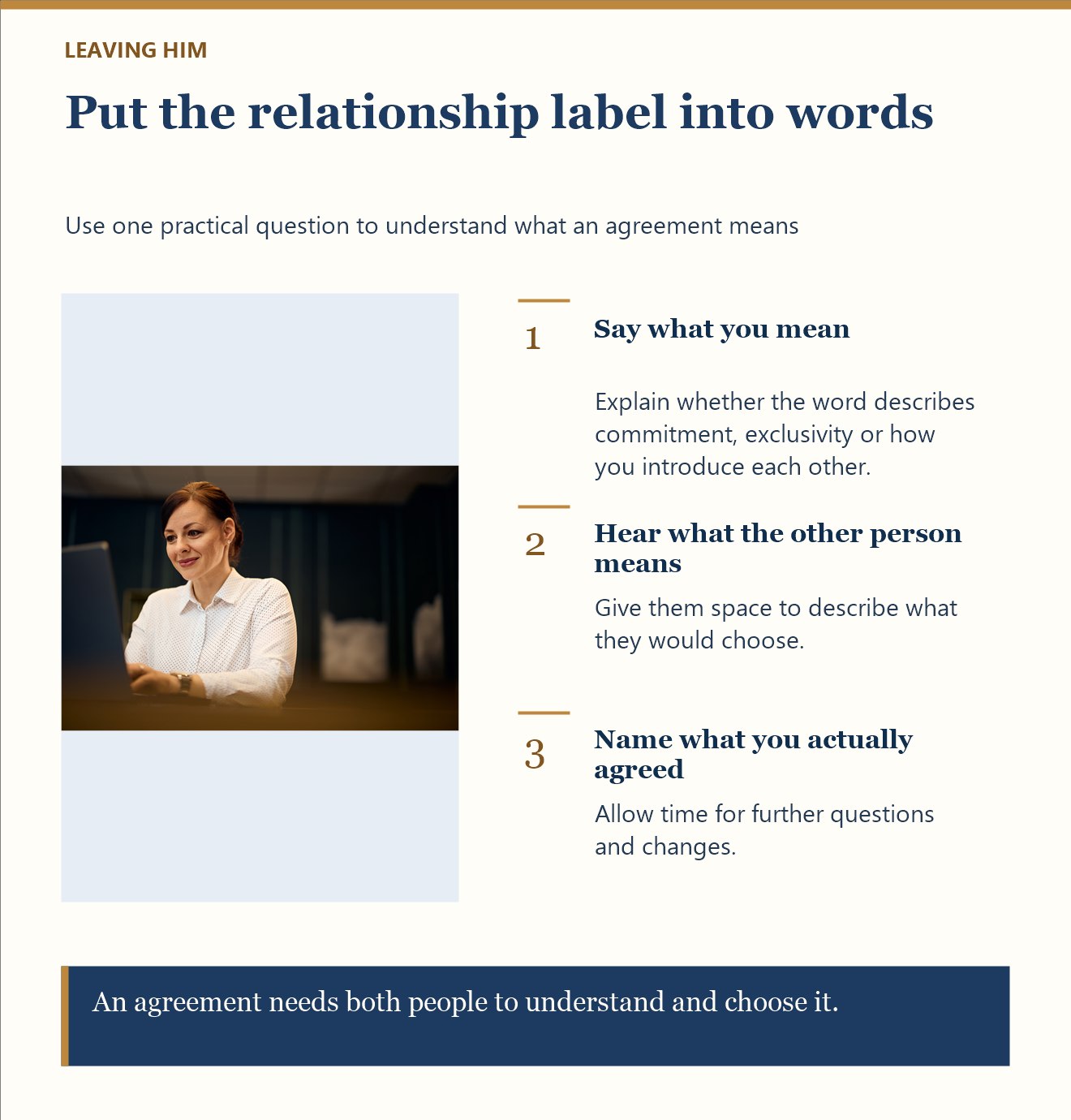
Put the relationship label into words
Use one practical question to understand what an agreement means
- Say what you mean Explain whether the word describes commitment, exclusivity or how you introduce each other.
- Hear what the other person means Give them space to describe what they would choose.
- Name what you actually agreed Allow time for further questions and changes.
An agreement needs both people to understand and choose it.